Exploring Characters pt. 3: Replacing Attributes and Rolling Under

Attributes are a sacred cow, which means for me they're good beef to eat.

That's Athletics alright.

First off, I'm a big believer that only 4 attributes are needed for a character and that one of these four should always be setting dependent. This means I have a standard 3 + 1 special. I'm a bit afraid that this might make things seem super rules-lite or straight forward, but to be honest, 6 attributes causes confusion both from # and how much overlap they have amongst each other.

In most OSR games, well, all OSR games, attributes are used as slight modifiers and no great focus is put on them. This is both good and bad. A big attribute focus implies character sheet and rolls are more important than choice; however, attributes can be a fantastic tool for both building a character narratively, as well as worldbuilding too (basically through that special stat).

I think roll under attributes takes the best of both worlds. Attributes can be a bit more important, but you only roll dice when you haven't taken enough precautions to really impact the chance of failure. This also allows for tinkering with attributes. 

The three standard attributes are:

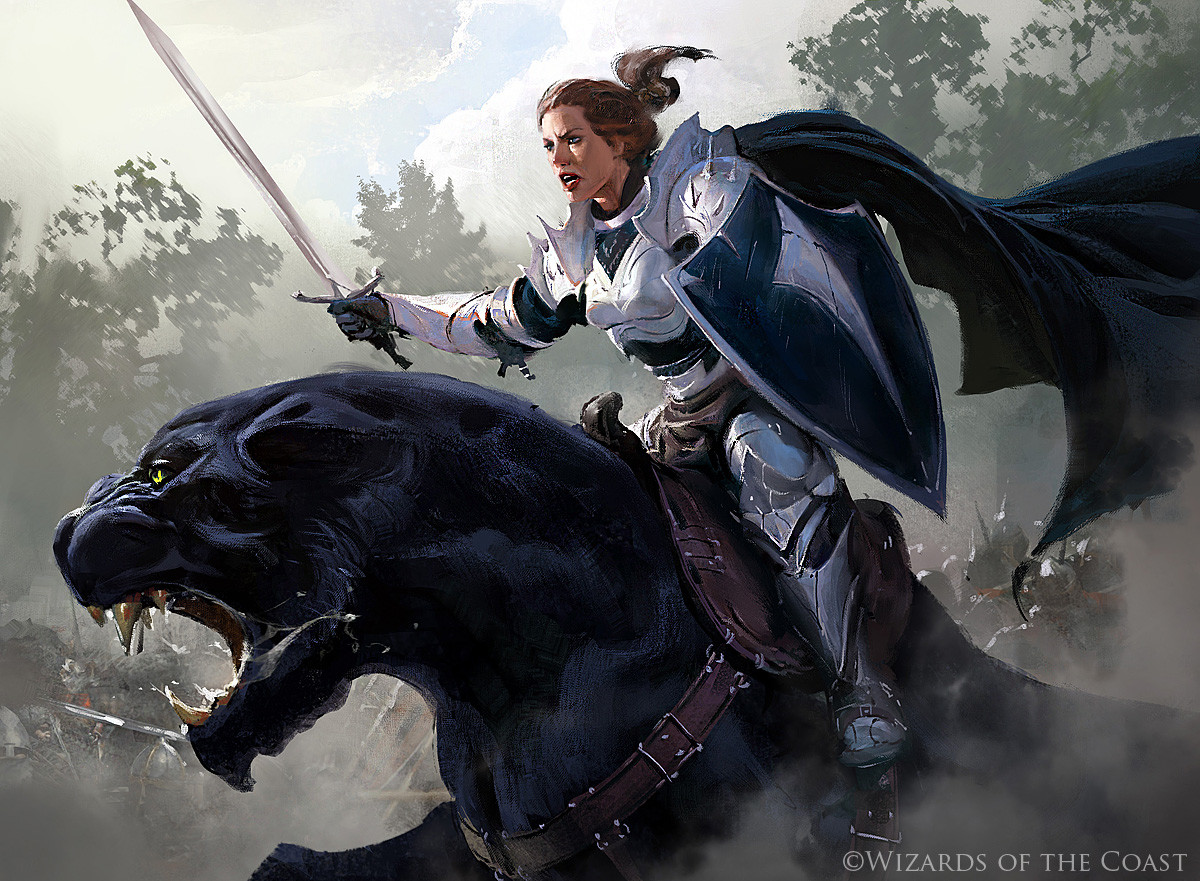
Athletic - This replaces strength, dexterity, and constitution. In a real world situation, most people who are strong are fit, and are usually good with their hands, especially athletics, etc. Gymnasts, basketball players, samurai, jousters--none of these people are clumsy by nature, weak, or of frail constitution (usually; exceptions can be handled with keyword conditions).

Athletics governs three things: Encumbrance, To-Hit Accuracy, and Damage. You have a # of encumbrance slots equal to your Athletics attribute; you roll under your Athletics to hit things with any type of non-magic attack; deal the # of damage dealt + the weapon die, so long as you roll under your attribute (so if your athletics is 18 and you roll a 4 to hit, you're doing 12 extra damage).

Savvy - This replace Intellect, Wisdom, and Charisma. Essentially, the more savvy you are, the craftier and more skilled you are, both signs of intellect. If you are really good at sleight-at-hand and pulling off heists, you probably learn things quickly and are good at picking up things on the fly.

Savvy governs three things as well: Delicate Matters, Knowledge, and Languages. You roll under your Savvy attribute whenever doing something like being sneaky, sleight-of-hand, or lying; roll when you enter an new hex and learn that many rumors, details, or events as long as it's under the attribute  (so if I make it to Vornheim and I have a Savvy of 12 and I roll a 5, I know 7 rumors, details, or important pieces of info); roll a d20 and you know that many of languages under your savvy score.

Weird - This doesn't replace anything specifically. This is what you use both for dealing with anything supernatural. Essentially the higher your Weird attribute, the more in touch you are with things spiritual and divine, or arcane and eldritch, or just plane fucking strange.

Weird covers a single thing: your knowledge of Esoteries. When you make your character, roll a d20 under weird and gain that many Esoteries. Whenever you spend an XP, you roll under Weird again to learn an additional +1 Esotery in addition to whatever you roll on your Class Advancement table.

Low Savvy & Weird.


To determine your stats roll 2d6+6 for one of your choice, and then 3d6 for the other three. Alternatively, put a 15 in one of your choice, and then a 10, 9, and 8 in the other three. These are low on purpose, given the power of keywords.

So then, on to the special 4th stat. Again, this depends on setting, but I'll give some archetypal ones.

Corruption/Taint/Radiance - Roll under this whenever you would suffer any of the above. On a success, you only suffer 1 point. On a fail, you suffer however many points are being given. If you have more points than your score, you lose your character or get a mutation or something.

Honor/Glory/Reputation - Roll under this whenever you enter into a scene with NPCs or monsters. On a success, they are awed or cowed by you without you having to do anything. The higher this is, the more well-known you are, the more doors open up for you in terms of exploring a world. Can be increased as rewards for clearing dungeons or helping kings or something.

Alignment [Ambition vs. Harmony/Chaos vs. Order/Light vs. Shadow] - Divide this attribute into 2, but choose one to be higher than the other (so a 12 in Alignment can be a 8 in Chaos and a 4 in order). Refer to this otherwise, though I might update this for the new method.
High Weird, probably high Reputation too.

I guess some examples might help.

Conan, the Barbarian - High Athletics and Savvy, low Weird, Reputation changes every story.

Alice from Alice in Wonderland - Low Athletics, middling Savvy, High Weird, special stat is something like Determination or Willpower or Acceptance, in which she is high.

Princess Mononoke - High Athletics, middling Savvy, low-middling Weird, middling Alignment with a lean towards Harmony.

Geralt of Rivia - High Athletics, high Savvy, high Weird, high Taint (from Witcher potion shit). 

Odysseus - Middling Atheltics, High Savvy, middling Weird, middling-high Reputation.

Aragorn - High Athletics, high Savvy, low-middling Weird, high Alignment focused on Light.

Luke Skywalker - Middling-high Athletics, low-middling Savvy, high Weird, high Alignment focused on Order.


Exploring Characters pt. 2: Keywords

All of this replaces proficiency from my last blog post.

Keywords are things used to define a character's narrative. They are short, punchy ideas that carry mechanical weight--any time you can apply a keyword to a roll d20 roll, you roll a d6 as well. If the d6 is a 5-6 and the d20 a success, you have a critical success. If either the d20 or d6 are a success and the other is not, the roll is a success. If both fail, it's just a failure.

Keywords: Dragonslayer & Devil ; art commissioned from Ragnar Pendon


Keywords are pretty abusable, so they require an unwritten social contract to not abuse them. If my keyword is "Mercenary" then I can take advantage when rolling against fear vs battlefield horrors, or having a clever getaway plan, or fighting dirty, but I wouldn't on something weird like politically influencing a king or something. Note the fighting dirty one--if your keyword influences fighting, it should only do so under certain conditions. This will require some thought from Ref and player, but in games of both player skill and narrative evolution, this should be assumed IMO. I considered making it so each keyword has like 6 things they key off of specifically, but that's way too much minutia for me and encourages something other than player skill.

Keywords are kinda' like backgrounds in 2E, but they go beyond backgrounds. Mercenary above is a keyword, but so is "Coward."

The problem with keywords is that too many keywords limits what other keywords can do. The pro of keywords is that they make for character development through progression, as buying keywords via XP would be a thing with this system. To solve this problem, the Ref should select 20 keywords for a given campaign, and those are the only words players can choose from. Use them as a tool for worldbuilding.

You choose keywords to supplement your class. Sometimes, this may lead to a weird result, like a Fighter with the "Magically Trained" keyword. The fun here is reasoning out what this means for the character/player. A fighter that is magically trained may be trained in recognizing magic, could be a witch hunter, or could be someone who knows the trick to breaking spells.

Some keywords might require description. Not sure yet.

Below are some keywords by project or genre:

Princess Mononoke Keywords


Image result for princess mononoke


  1. Eyes Unclouded by Hate
  2. Bond With Animal
  3. Nature Friend
  4. Vicious Leader
  5. Bodyguard
  6. God-raised
  7. Scornful
  8. False Monk
  9. Cursed by Hate
  10. Hated by Gods
  11. Gunsmith
  12. Foreign Prince(ss)
  13. Hunter
  14. Samurai
  15. Former [Prostitute/Slave/Exile]
  16. Ambitious
  17. Schemer
  18. Silver Tongued
  19. Lord/Lady
  20. God Killer

Dark Sun Keywords

Image result for dark sun

  1. [Insert trade] Slave or Slaver
  2. Disciple
  3. Survivor
  4. Cannibal
  5. Defiler or Defiled
  6. Oasis Preserver
  7. Templar
  8. Desperate
  9. Hard to Kill
  10. Gladiator
  11. Whispering Bard
  12. Elementalist
  13. Druid
  14. Dead Mind
  15. World Traveler
  16. Raider
  17. Tribal Leader
  18. Grain/Well Noble
  19. [Insert trade] Merchant
  20. Caravan Guard

Cyberpunk Keywords

Image result for cyberpunk

  1. [Insert specialty] Hacker
  2. Back alley Doctor
  3. Shadowrunner
  4. Bladerunner
  5. Data Horder
  6. Drone Fanatic
  7. Neuromancer
  8. Dirty Celebrity
  9. Body Mod Dealer
  10. Enhanced [Insert Personality Trait or Body Part]
  11. Off the Grid
  12. Double Life
  13. Gun God
  14. Street Punk
  15. Corporate Protected
  16. A.I
  17. Bio-engineered
  18. Uploaded Immortality
  19. Ganglord
  20. Hired Muscle

Exploring Character Leveling Up

Haven't blogged in a while; grad school and personal projects have kept me tangled.

Anyway, been thinking about character leveling up recently. Inspired heavily by Zak S's d100 table of leveling up for various classes, but I wanted to polish it some more to fit my specific taste.
Dragon Bride Killing Drakes: A piece from my upcoming book, a Heaven Bless'd & Burned.

I'm thinking something like this:

Every class has the following-

Level: Goes up whenever your game system or house rule says it goes up. You'll roll on the below Class Advancement Table. You add your level to any checks dealing with hirelings, meaning Charisma no longer needs to be a stat, but it can be.
HD: Depends on class.
Proficiency and Proficiency Bonus: I'm stealing from 5E and applying this to the OSR. Every class lists out a number of things it is proficient at (Fighter: Using Weapons, Attacking, Endurance) and d6 things you roll for as an additional proficiency. (Fighter d6: Animal Husbandry, Commanding Troops, Saves, Intimidating, Remaining Focused, Survival). You add your Level to rolls that would fall under these categories. If this ever overlaps with hireling checks, you are basically doubling your HD bonus.
Saves: This is standard to most OSR stuff. I'm a big believer in 5 categories that fit the world.
Plausible Starting Equipment: Have a d20 and roll the d20 a number of times equal to what the Ref says the table's starting wealth is (which is a number 1-10, with 1 being vagabonds and 10 being filthy rich). Each class has a number of unique pieces of equipment.
Class Advancement Table: This is a d100 table. The first 50 #'s are the same between all classes; the next 50 are unique to each class. The first fifty are

1-20: HD increases by 1. Roll again and add 20 to the roll unless you choose this option from #50.
21-30: Add +1 to all saving throws.
31-40: 1+your level of hirelings are attracted to you by reputation alone.
41-49: Roll your d6 for an additional proficiency, rerolling until you have one you don't already have. If you have all, then whatever you roll, double your bonus in.
50: Choose any of the below options, then roll again, adding +50 to your roll if it's 50 or below.

Then after this, there would be another set of options specific to class. Options should take up more slots if they are weaker, and fewer slots if stronger. Any roll that ends up being over 100 is just considered 100.

Radiant Saint of Tiamat: A piece for my upcoming book, mentioned above.


This isn't for making a balanced game, but it does make a form of character generation that I think puts a focus on player skill and gives buttons at the same time for the player's to potentially hit, because I just like having buttons to hit.

At level 1, you are given an automatic 50, so you start with any option below 50, and then re-roll and get an option above 50. Starting characters are thus pretty decent in terms of power compared to something like a level 1 DCC character, but not so much that it's like dropping a 5E character into an OSR adventure.

I plan on testing this idea with my homegroup and seeing where it leads.