Showing posts with label essay. Show all posts

5E Sublime - Ideas, Construction

Runehammer released a hack of D&D lately called 5E: HARDCORE MODE. Its very interesting, bridging old school ideas with the more new school styles of play, but still firmly in something brutal, realistic, and traditional. Much of what it does adds a lot of difficulty back into D&D out of hopes that games will lean towards quests to overcome challenges instead of always resorting to raw combat. I won't go into deep detail about how, though some methods of how it does this is: capping players at 10, keeping HP low, streamlining CR, and expecting players to confront things hyper-lethal to them without preparation/research done.

I want to use this as a model to create my own version of D&D (as everyone else has) using some of my work on Rising Legends while also moving in a completely new direction. I also want to draw on my old Saga Style stuff too. The main thing I want, however, is to keep 5E's sub-classes. Sub-classes are, for me, the thing that honestly keeps me playing 5E; I like ever more precise, specific character concepts - which, I know, is kind of heretical to people who usually "trim the fat" from D&D. On top of this, I want to use my own created spellbooks (which I plan to make more of soon) for this. Magic is the reason I play Fantasy; watching how the Weird changes the Normal is the kind of art I'm usually interested in making.

So with those steps outlined, let's look at what I am thinking so far.
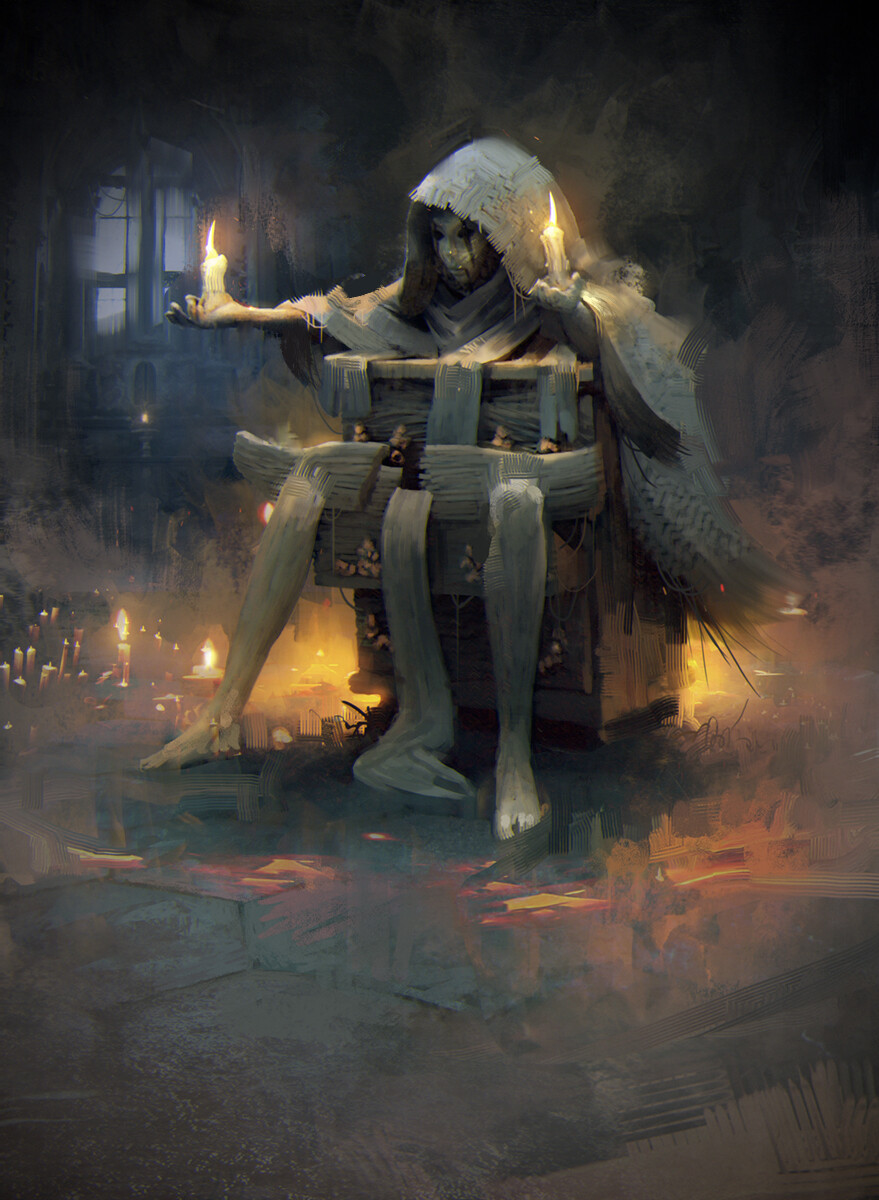
Candle
Piotr Foksowicz

5E Sublme is the working name I'm going for. The sublime, in a literary sense, is used to described scenes, characters, events, or stories that are greater than human in a way difficult to understand or comprehend. One never fully notices when they slip into the sublime, but they are always aware that something is sublime around them. Because something is sublime, they cannot escape or look away from it. Instead, they must work with it, enter it, or be destroyed by it.

The sublime is the core of what I like in RPGs. It doesn't have to be magical, it can just be intense humanity, crazy sci-fi concepts, etc. I'd like to think that something like Dungeon Crawl Classics is a pretty sublime game, or Troika!

I've mentioned that I'm using 5E HARDCORE MODE as my model for building this, so there's a few things I want to lift from it to keep. Those are:
  • How hit die + rests work.
  • How monsters + CR now works.
  • How initiative + skill/off skill works.
  • Respawning methods.
  • Level 10 cap.
  • Zones/Movement.
With that in mind, the following are concepts I plan to change/use for 5E Sublime.
  • Class features almost exclusively being sub-class features.
  • Different way of gaining experience.
  • Different way of casting spells.
  • Adding in an Explorer procedure.
  • Making use of 5E's Exhaustion system as a consequence system.
  • Additional survival tool (indomitable). 
Everything not covered by one of these two sets of changes is in the D&D Basic Rules (if you need it).

Saeed Farhangian

Classes are defined in 5E Sublime as methods in which you (the players) enter the world of the sublime. These are the things that make you something greater than human.

Each class comes as a duo-package. There is a version of it more focused on "tricks" and a version more focused on "combat." At 1st level, you gain a class feature. At every even level afterwards, you gain sub-class features. For your sub-class, find your favorite sub-class from that class in your 5E books and use it. If a sub-class grants multiple features at the same level, then you gain all of those features when you learn one of them. For example, if your Sorcerer sub-class learns two features at 6th level in core 5E, you would learn both of these at 4th level in 5E Sublime. If your sub-class wouldn't grant you 5 different levels of features in 5E Sublime, you would instead learn that classes 20th level capstone in core D&D at 10th level.

The Classes Are:
  • Cleric/Paladin - Entering the sublime through faith in a religion, power, creed, or oath.
  • Monk/Disciple - Entering the sublime through internal ki or psionic mutation.
  • Sorcerer/Artificer - Entering the sublime through being born afflicted with magic or knowing how to forge magic into tools.
  • Warlock/Hexer - Entering the sublime through strange pacts or drastic modifications of the self.
Note that all classes are mystical in some way, and that I don't add a thief class. Any of these can be thieves, and 5E Sublime is a game about exploring strange magics and how they effect people, societies, etc. As you progress, you'll get weirder and weirder, more and more sublime, until eventually you hit level 10 or otherwise die for good.

The Hexer uses Matt Mercer's Blood Hunter 2020 for its sub-class options. I changed the name to fit an aesthetic I prefer.

In the above class list, classes on the left side are considered Mystics, while those on the right side are considered Warlords. This is important to remember just for keeping up with stuff below.

Class progression is as thus:
  1. First class feature. Mystics start with 3 spells of a tradition. Warlords have a fighting style + 2 attacks.
  2. Sub-class feature(s).
  3. Mystics automatically learn 3 more spell of a known tradition. Warlords gain 1 Indomitable use.
  4. Sub-class feature(s).
  5. Mystics +3 spell of a tradition. Warlords +1 Indomitable use.
  6. Sub-class feature(s).
  7. M +3 spell of a tradition. W +1 Indomitable use.
  8. Sub-class feature(s).
  9. M +3 spell of a tradition. W +1 Indomitable use.
  10. Sub-class feature(s) OR (if not viable) class capstone feature.
A tradition is a tradition of spellcasting. This is the broad term given to spellbooks I've developed and have used so far. An example is my recent blogpost on the Plane of Lightning and the magical tradition that stems from it. Keep in note that Mystics can learn spells by finding them/being taught in addition to leveling up. Warlords can learn spells through the same means. Adventuring to learn new magic is one of the core reasons to adventure in 5E Sublime.

Indomitable is a feature taken from the core Fighter class . Once per rest, a Warlord class can dig deep into themselves to overcome a failed saving throw. I choose this as their special gain as I like the aesthetic of these kinds of characters somehow, through a method no one else can, just shaking off the effects of some supernatural hazard or other doom.

You gain a level through earning experience. Experience is earned by taking on sublime challenges. All things, from monsters to traps to riddles and puzzles, should have a CR attached to them. Using 5E HARDCORE's math, you get experience from something equal to CR x 200. All other 5E HARDCORE CR guidelines are in use, streamlining the numbers needed to overcome these challenges.

Mystics require the following experience to gain levels:
  1. 0
  2. 300
  3. 900
  4. 2300
  5. 6500
  6. 14,000
  7. 23,000
  8. 31,000
  9. 37,000
  10. 40,000
Warlords require the following experience to gain levels:
  1. 0
  2. 200
  3. 600
  4. 1800
  5. 4200
  6. 6000
  7. 11,000
  8. 18,000
  9. 24,000
  10. 30,000
As it takes longer to level, your Proficiency bonus increases a bit faster. Starting at +2, it increases by 1 every three levels after, to a maximum of +5.
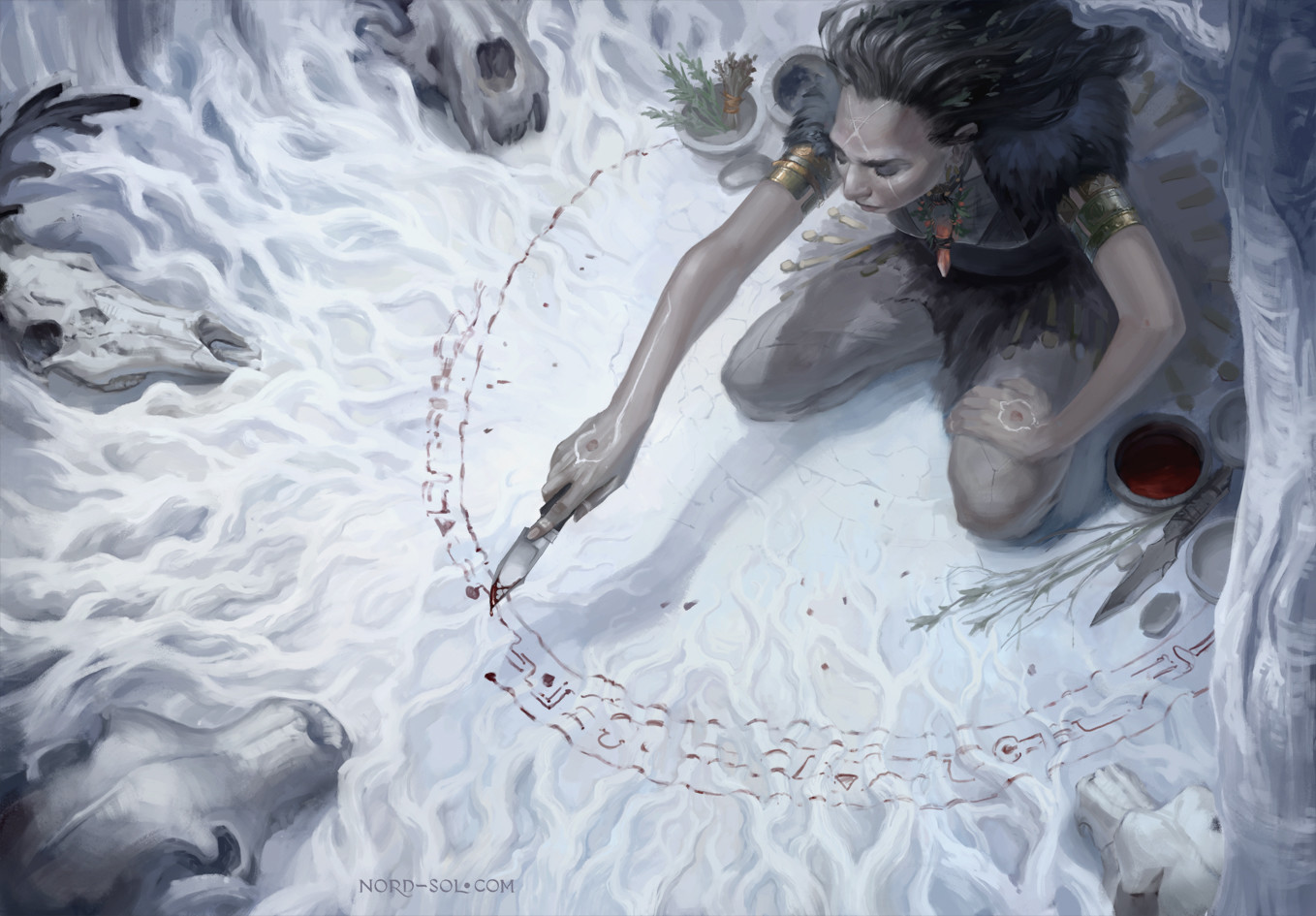

White Woods
Irina Nordsol Kuzmina
Spells and magic items and weird shit are the core of the game. Finding this stuff is the real reward. Experience is for you to get more tools to find cooler stuff so that you can dig deeper into the sublime on your adventures.

All classes have spellcasting as an inherent feature. Manifesting a spell is rough on the body; thus, you can only cast as many spells as you have HD. Once you run out, you must finish a long rest to regain all uses. If you have a feature that uses spellslots, it instead uses one of your spell castings for the day. If you are out of spell slots, you can risk your life to cast a spell instead. Roll 2d6 + your Proficiency bonus. On a 10 or higher, you cast a spell. On a 9 or lower, you cast the spell but lose hit points = to the amount under 10. So, if you cast a spell with no castings left and roll a 5, you lose 5 hit points. The spell will cast, even if this kills you.

You can learn additional spells on an adventure through a number of ways. If you find a master, you can buy an education from them (either through favors, wealth, or magical items). If you find scrolls, you can decipher them and try to teach yourself (though if you ever use the scroll, note that it is destroyed in the casting!). Every tradition has its own guidelines for how long it takes to learn a spell through it. Once that time has passed, you have to make a check. The DC for the check is 15 + the Spell's level. The roll made is d20 + Proficiency bonus + Int or Wis or Cha modifier (determined by class). If you fail, something about you changes internally; you cannot attempt to relearn the spell for a year and a day after failing. 
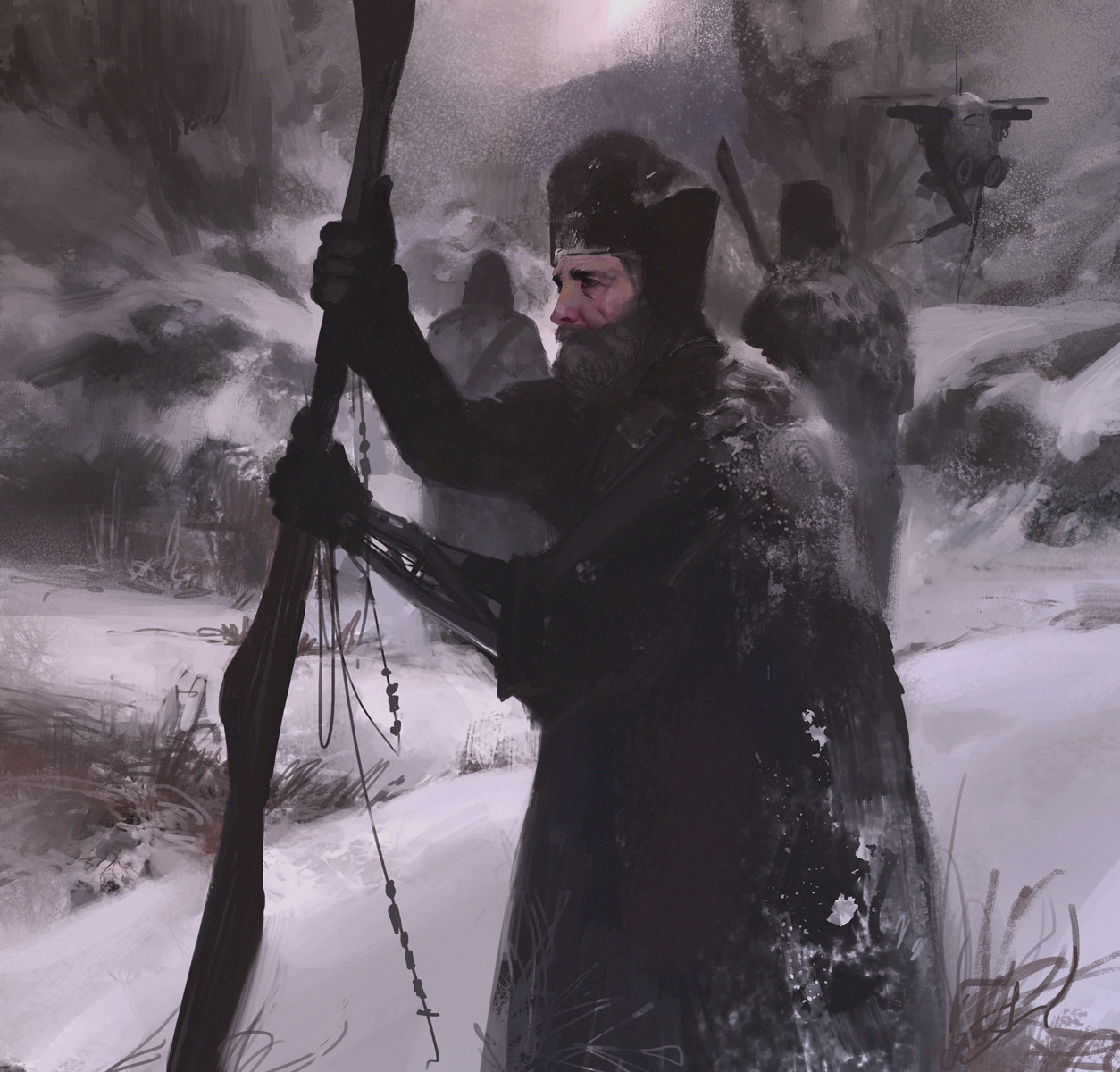
Pilgrim
Tomas Osang Muir

Exhaustion is key! Exhaustion is my favorite mechanic in 5E and it has gone underutilized for too long!

Primarily, exhaustion is inflicted in 5E Sublime through new ways to add challenges to exploration.
  1. When a saving throw is failed against a trap or hazard, a player can elect to take 1 level of exhaustion instead of suffering damage.
  2. When a player fails their check to cast a spell without having any spellcastings left, they can elect to take 1 level of exhaustion instead of suffering damage.
  3. When a player suffers more than 10 damage from a single attack or effect, they can elect to take 1 level of exhaustion and halve the incoming damage.
  4. Some traps or hazards or other effects may simply just inflict exhaustion instead of other banes.
Exhaustion is removed in the standard ways; however, if a player rests for 20-24 hours at once (essentially a full day), they can remove all levels of exhaustion. This should be difficult to achieve! A player having a full day of rest is subject to the danger of being discovered, of dungeons or areas resetting, or of losing an opportunity to gain something important!
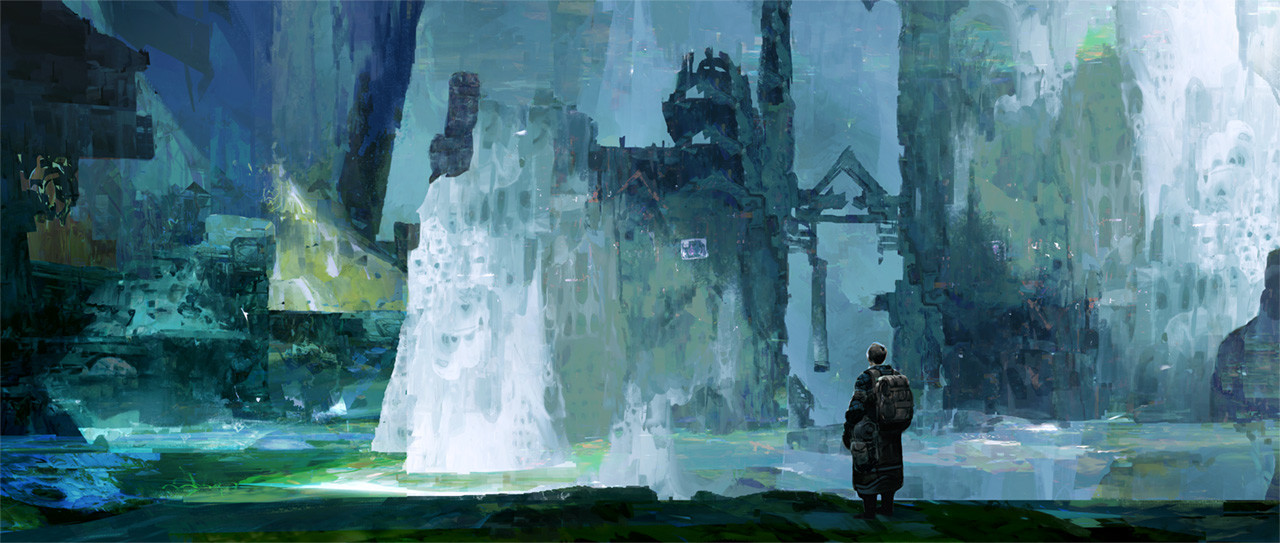
Thomas Scholes
Exploration feels bad to me in 5E. It took me a long time to finally say this but after years of playing the game, I absolutely hate exploration in it. This is because, unironically, time is so fluid normally that I'm not sure how to go about it in a standard game of 5E core. Below is my solution to this (after trying many, many, many different methods...)
  • Decide if you are either Crawling (IE in a dungeon or similar area) or Ranging (IE in open wilderness or a ship).
  • If Crawling, a round is 10 minutes. If Ranging, a round is 1 day.
  • When a round starts, explain everything they see. If a player's passive Perception beats the DC for finding something, they should automatically find that thing.
  • On every player's turn, ask them what they are doing. Do not resolve these actions yet. This should be stuff that achieves a single task, like finding clean water, hunting, preparing food, searching for possible places to camp, investigating, etc.
  • At the end of the round, have all players roll any ability checks needed and introduce any hazards, complications, or dangers. Everything happens at once for tension and adding weight to decisions.
  • If a hazard/complication/danger has appeared, resolve it before beginning the next Crawling/Ranging round.
  • When a new round starts, ask the players where they've moved (to a new hex or point, to a new dungeon room, a new zone, etc) and start the process over.
Keeping track of time lets me keep track of all the basic stuff like dehydration etc. I can apply exhaustion for penalties more easily, add more nuance to traveling, and so on. This is basic stuff, just stripped down in a way to use with 5E.

Encumbrance is mentioned too, but not in 5E's atomic detail. Your Constitution ability score + your Intelligence modifier = how many slots you have. This is because your body's constitution determines how much you can load it with, and your intelligence is how smartly you pack your stuff. You need a bag to carry; if you don't have a bag, chest, etc, you can only carry stuff in your hands or wear it.
  • Armors and large things use 5 slots if not worn.
  • Weapons + shields use 2 slots if not held.
  • Meals, gallons of liquid, coin purses, and all other things are 1 slot (within reason).
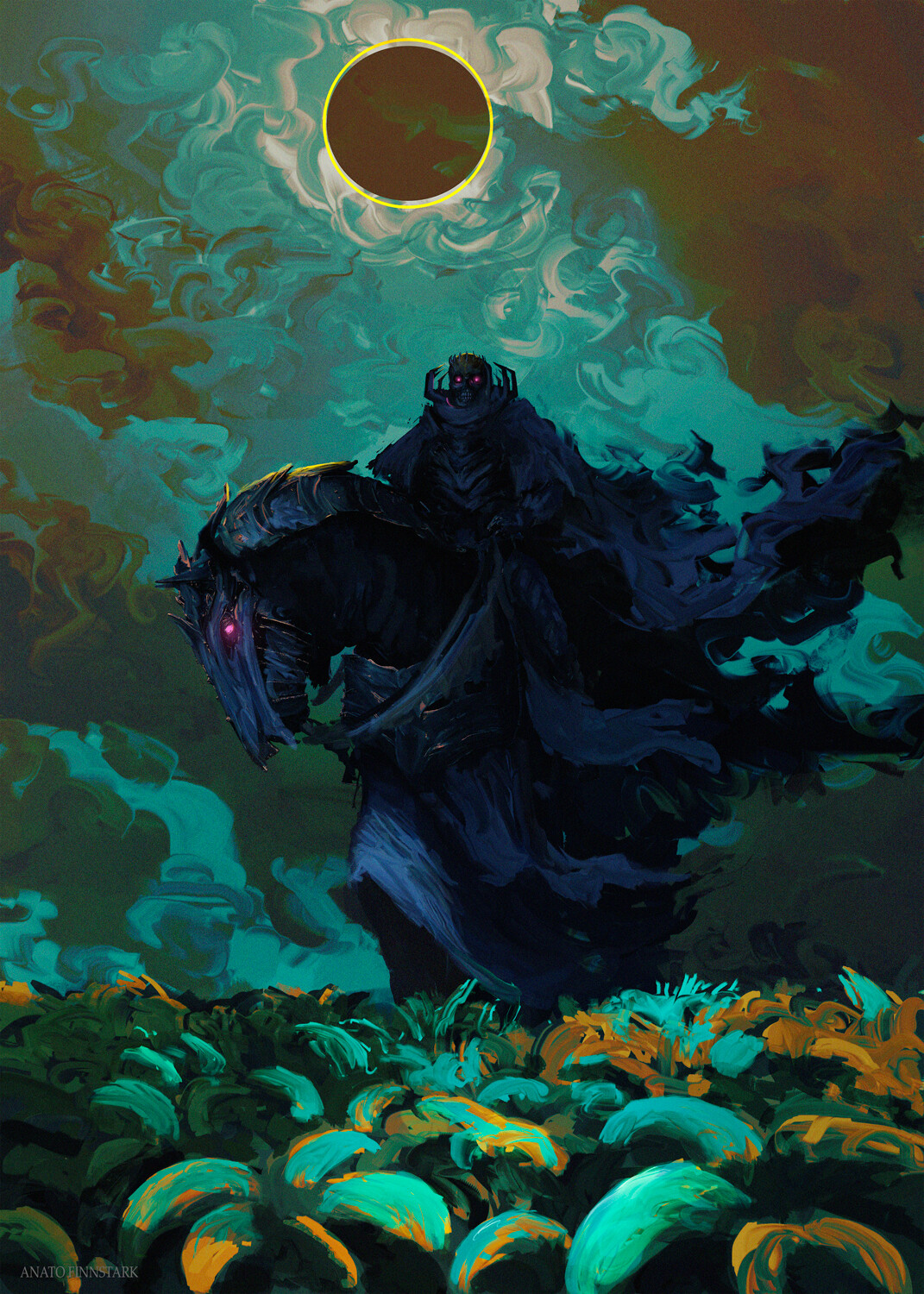
Anato Finnstark
So what's next? 

Next blogpost in this series, I'll go over the 8 classes, their 1st level abilities, their saving throws, and talk about how I wanna do races. After that, its a matter of playtesting this stuff and making more spellbooks and challenges. I'm not sure if I'll ever publish this ruleset, but at the very least I'll condense it one day for ease of giving to my players. 

The Plane of Lightning & Thoughts - Fulmens - Spells of the Storm-Wracked Noosphere

In conjunction with a good friend of mine I'm helping start the Planescape challenge. For those too lazy to click the link just now, its essentially a re-imagining of various planes, but instead of directly waxing poetic about them, they are informed via the various kinds of magic that stem from them. My choice of plane was the Plane of Lightning.

Note: I'm considering one day maybe publishing these spellbooks, or making some kind of game around them. Is that something readers of this blog would be interested in?
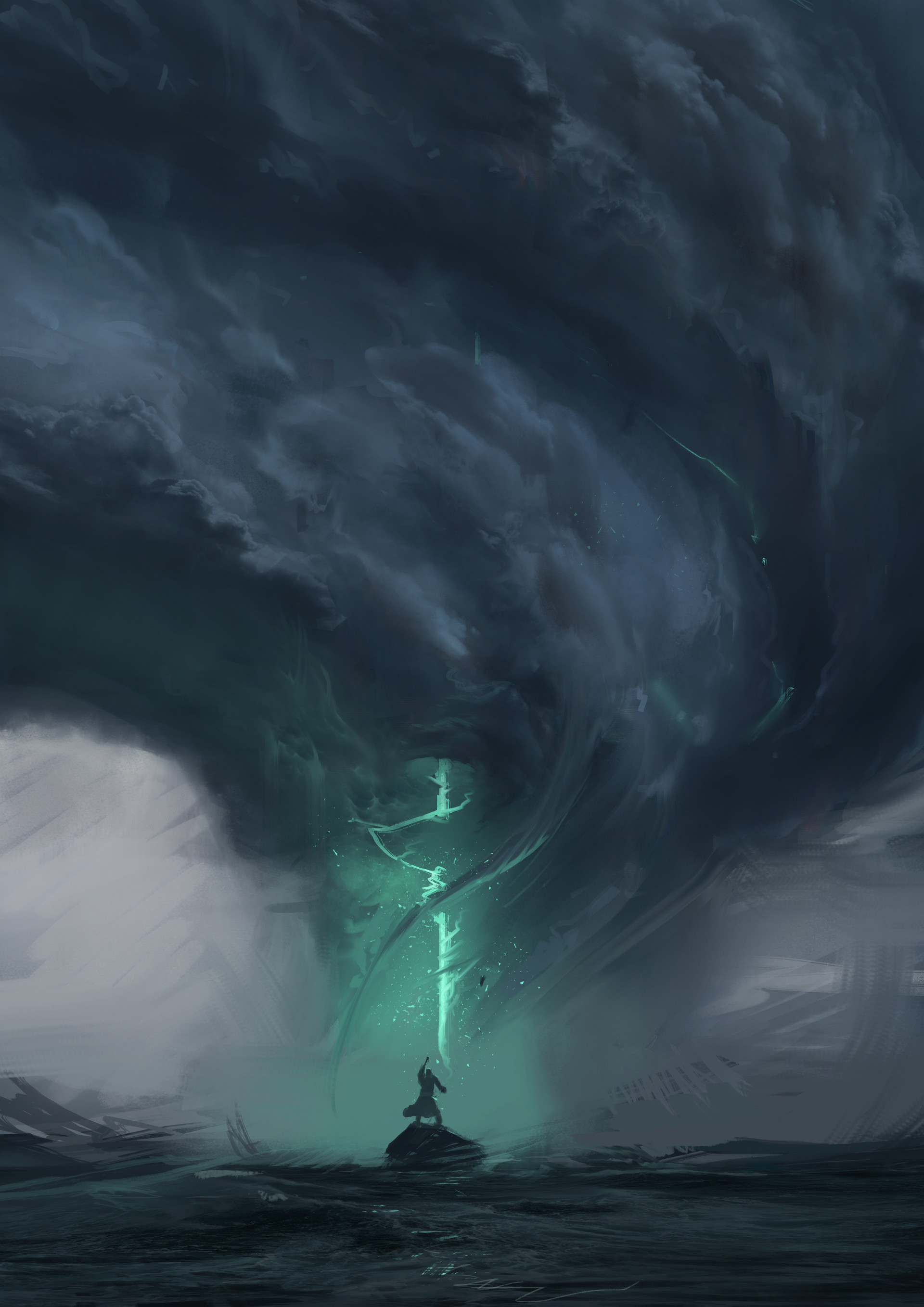
MIGTHY THOR
Eric Tualle
First, some context.

The Noosphere is the term given to that untouchable, unknowable plane of existence where all ideas, thoughts, dreams, and impulses are drawn from. As a place, it is alive. It crackles with synaptic static, leaves the skin tingling with the electric flash of ideas both good and bad. This is why the Plane of Lightning is so oft called the Noosphere, as they are, in truth, both one and the same. After all, how does the brain communicate if not through electricity?

Thus, the Plane of Lightning, the Noosphere - think of it as the ever-dreaming mind of the universe itself. 

Neurons
Glen Johnson
A closer idea to how the Plane of Lightning might look
Drawing on the Plane of Lightning for your magic is a dangerous affair. In order to be properly initiated into these esoteries, one must perform a certain ritual.

Take a small nail of silver, pure silver, silver newly fashioned into this shape and cleansed in water purified utterly. Take this nail and insert it into the roof of your mouth, slowly. It will hurt. You will bleed. Reduce your hit points by 2 permanently. Find a storm and there, meditate. Think. Do nothing but think. Think as it rages and ensure no rain is falling, lest you call the attention of a different, more diluted plane. Ensure that Jupiter, or your settings equivalent, is bright in the sky just beyond the clouds. Think on things you do not know. Wonder. Muse.

Eventually, the lightning shall strike. Drawn by your thoughts and the silver in your mouth is this bolt slung from a dimension beyond our own and when it falls it stakes its way into you forever and always. Your mind will be overwhelmed. Your thoughts will be wiped from your brain, alongside your fears, your hopes, your ideals; this state is fleeting, of course, no longer than a second's sliver, but in that second your brain will become the host of the Plane of Lightning.

As it is a plane, it can exist in many places at once. While it is there, you will feel it. You will know it. Roll on the Fulmen's Omen table below to see how exactly your ascendancy into a Fulmen (as those so enlightened call themselves).

Fulmen's Omen
  1. The air around you smells of charged ozone, and animals scurry as your anger rises.
  2. When you speak, others hear peals of thunder far off in the distance, as if a storm neared.
  3. When others look at you, their thoughts are mixed with the thoughts of peoples and creatures somewhere far away.
  4. People close to you feel an electric shock whenever they touch someone else.
  5. When you are injured, the sound of buzzing, crackling, or hissing fills the ears of those around you, growing louder the more you are hurt.
  6. Metal objects within 30" feet of you let off a soft, pale blue-white glow - St. Elmo's Fire.
  7. When your eyes fall on someone, the hairs along their arms and neck stand up on end.
  8. When you see someone you intend to hurt, the hair on their head begins to raise.
  9. Intrusive thoughts bloom in the minds of everyone who touches you.
  10. Those talking with you feel as if they are experiencing a constant stream of new ideas.
  11. When you feel threatened, whoever is threatening you feels as if their teeth were vibrating.
  12. Those who you hurt feel as if they can speak a new language, know a new skill, or do a task they never had the knowledge to do so before. This is fleeting; it disappears after a moment's notice.
When you become a Fulmen, you learn a single Fulmen's Secret. You learn an additional Fulmen's Secret every 15 Fame, if you repeat the meditation process of the ritual 1 month after the first, or (if your system of choice has it) you gain 2 levels. You can learn a Fulmen's Secret of a higher level if you know 1 secret of the level immediately lower.

If you repeat the meditation ritual, your hit points are reduced by 1 each time. Getting struck by lightning repeatedly, even if magic, does little for one's health.

There are other ways to learn Fulmen Secrets. Traveling to the Plane of Lightning (& Thoughts), though dangerous to the extreme, is something that Master Fulmens oft do in the later years of their lives. Likewise, by stealing the silver nail from a Fulmen's mouth and performing the entire ritual over with that nail, you can learn all the secrets they knew. Doing so, however, means that you lose whatever secrets you both did not know.

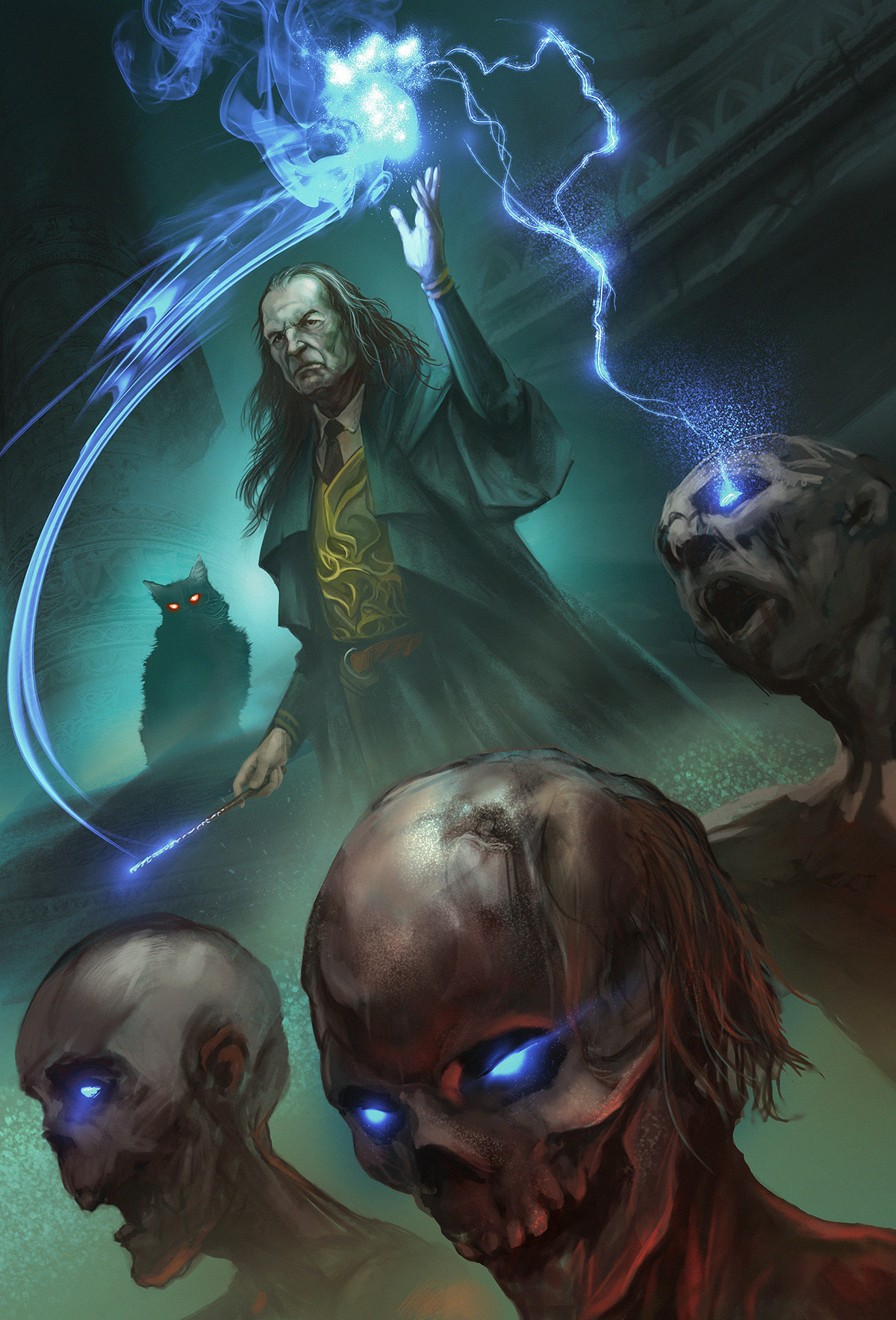
"Argus Filch, the shadow Necromancer"
Nicolas Camiade
A Fulmen who has dabbled in other magics too.

THE FULMEN'S SECRETS

Names & Levels (using standard B/X spell levels to determine what kinds of slots to use)
Roll 1d3 when learning a Fulmen's Secret to see which you grasp from the Plane of Lightning

First Level
  1. How to Become Wise as All the World's Sages
  2. St. Elmo's Fire Turned Upon Those Who Dare to Know What They Do Not
  3. The Painful Art of Forking Thoughts Into the Unenlightened
Second Level
  1. Attract Those Crackling Thoughts that Evade You Still
  2. Dim the Stars that Fork Into Endless Logics
  3. Enrage Those Mindless Mortal Heavens
Third Level
  1. Cast the Storm Across Mountains & Memories
  2. The Secret to Erasing All Knowledge of the Sageless Heretics
  3. Turn Thy Muscles Into Countless Thoughts

DESCRIPTIONS - FIRST LEVEL

How to Become Wise as All the World's Sages
Close your eyes and see naught but the roiling storm behind them. See flashes of lightning - of brilliance - and call one to you. Your hair stands up on end. Your eyes, still closed, glow so brightly they shine from behind your eyelids. All who see you see a bolt of lightning fork its way down from the heavens and into your body. Your veins burn blue through your skin; open your eyes then, and you will have a sage-like understanding of one academic, magical, or practical topic of your choice. You cannot speak to share this knowledge. If you do, the lightning escapes from your mouth and you lose your blessings. Lasts for as long as your mouth is kept shut. Some Fulmens even stitch their mouths to ensure they never lose their wisdoms.

St. Elmo's Fire Turned Upon Those Who Dare to Know What They Do Not
Lift your left palm skywards, for the left is that which masters the occult. See before you creatures that have blood, or else have iron or copper or some other metal inside of them, no matter how trace the amounts. Whisper. Whisper and close your eyes and see the storm and see them inside the storm. You do not know what you are whispering; only that there is sound coming from your mouth, and to others it sounds as if faint, distant, echoing peals of thunder are slipping past your lips. Open your eyes and see that everyone you just envisioned is glowing a faint, pale, cobalt blue. They do not know this, nor does any other non-Fulmen. Whenever you sleep, you shall enter into their mind; you will know all that they know for as long as you do, and if you wish, you can grant them knowledge that you yourself have. If you grant them knowledge, there is a 70% chance that portions of their brain are overloaded by the introduced static, making them forget 1d6 important details or memories that they know. If both Fulmen and victim are sleeping, their dreams are yours to control.

The Painful Art of Forking Thoughts Into the Unenlightened
Hold out your hand, aimed as it is towards the source of your ire. Let your emotions cascade into brilliant strikes of lightning inside of your head. Hear the echoing, pealing, roaring, angry thunders. Draw on the noosphere; hunt for information on how to kill, how to butcher, how to murder. In a flash of brilliance it comes to you; a lightning bolt drops into your hands, screaming, screeching, and in that moment you must fork it into that creature that you hate. When it strikes, the creature knows all the knowledge you just hunted for. It fixates on one method of murder. Then, that method happens. Perhaps their throat opens up just the perfect way to make a Glasglow smile. Maybe their bones suddenly break as they learn the appropriate number of hammer strikes that it takes. There is a  70% chance that they survive. And if they do, the knowledge remains with them, forever; a way to make assassins, if one has ample bodies for the coinflip.

ACHILLES
Marta Nael.
What I imagine to be a Fulmen, enhanced with some crystal, preparing to create their assassins.

DESCRIPTIONS - SECOND LEVEL

Attract Those Cackling Thoughts that Evade You Still
Lift your left hand skywards, occult wand that it is. You know so little about the reality around you. But someone must. Think on what you do not know and create the cackling display. Every living creature within 1 mile and with an open roof above their heads will emit from their crowns a bolt of lightning that slings and slithers through the air to be gathered into an orb held in the palm of your hand. It burns away the skin there, singes the flesh; these are wounds that will heal supernaturally within 1d4 days time, but until they do you can hold nothing else with this limb. Now, with the lightning gathered, watch as it turns into a bolt of lightning that strikes you thusly. You will learn, from the minds of those you have sought:
  • Their location.
  • How to perform the skills they know best.
  • Who they love the most.
  • Who they hate the most.
Your personality is destroyed. You can learn nothing else, lest your brain be turned to ash. Memories will not take while this knowledge is held inside of you, but you can repeat the information freely, perhaps to a scribe to record it, or another Fulmen to learn it. Lasts for 8 seconds for every lightning bolt you have consumed through the casting of this spell. 

Dim the Stars that Fork Into Endless Logics
Choose an individual that you can clearly see. Point to them with your left hand, palm facing the ground. Lower it. Slowly. Steadily. Your arm aches. The individual will turn their attention towards you entirely but will not move. The star that is their mind dims. Intelligence spills out of them; the ozone smells, their hair rises on end, metal objects begin to glow with St. Elmo's fire that they hold. Once your hand is flat by your hip, the spell is done. 30% chance of success and if so, they are a catatonic mess, totally incapable, drooling, tongue lolling out of their mouth, unresponsive to any and all stimuli. But the moment you move your hand more than 5 degrees in any direction, their star flares and intelligence returns to them. Useful for the binding of immortals; many a Fulmen has an apprentice bind their arm to their sides so that djinn or angels or demons work not their terrible works upon the world.

Enrage Those Mindless Mortal Heavens
All lightning that is not inside the Plane of Lightning is mortal lightning. It is mindless, stupid. Easily enraged. Close your eyes. Feel the storm beating against the inside of your skull. For just the briefest of moments, let it out. A wave of skin-tingling and invisible electricity will race from your body, felt for ten miles out. In the heavens above does the storm come suddenly. Bolts of lightning will fall to the ground haphazardly and non-stop for as long as your eyes are kept closed. For every minute there is a 2% chance of someone beyond yourself being struck by a bolt of lightning, doubling for every additional minute that passes. If struck by a bolt of lightning, a creature's mind is scrambled; they will become enraged and mindlessly run about attacking everything and everyone but the Fulmen until the caster's eyes are opened. Objects struck by lightning are sundered; if wooden, they ignite.


Oliver Mootoo
A Fulmen gathering knowledge, for better or for worse.

DESCRIPTIONS - THIRD LEVEL

Cast the Storm Across Mountains & Memories
See your victim. Inhale. Deeply. More deeply still. Your victim will feel then as if they have been struck by lightning. They will know your thoughts. They will know your intent. As they try to stop you, exhale. The storm inside your skull sends a budding piece of it across time and thought directly into the mind of your chosen servant. They may mentally fight back. As they struggle, repeat this ritual - simple as it is - and finish what you have started. 10% chance of failure. When you succeed, their brains have been utterly replaced with a sliver of the Plane of Lightning - your Plane of Lightning. In all ways are they now a mental clone of you. They know they are a budded thoughtform inhabiting a body of your choice and that they come from you. Your mind-clone will serve you in all ways. The original mind is gone, set adrift in the Plane of Lightning. Only by traveling there and capturing their lightning in a bottle can you restore them.

The Secret to Erasing All Knowledge of the Sageless Heretics
Grab your victim. Kiss them. As you do so, you create a bridge between your Plane of Lightning and their brain. In that moment, every single neuron they have is attuned to the infinite inside you. Choose which to kill. You are erasing vital information from their mind. Burning those neurons to cinders so that it literally can never be used again. Steal their ability to keep their heart beating, or their lungs filling with oxygen, and so on. A perfect assassination tool, used as such throughout Fulmen history. If used on another Fulmen, begins a tug-of-war between them; the two must say a word back and forth to each other, each taking a turn. The first to finish a sentence obliterates a chosen bit of knowledge in the other's mind that has less letters then the sentence does. A complicated affair - one oft avoided by Fulmens against each other to avoid the hassle.

Turn Thy Muscles Into Countless Thoughts
Be obliterated by your own Plane of Lightning. Let loose mental blocks you did not even know were there. It will flood your body. Your muscles will be destroyed, your skeleton too, every fiber of who you are. In a flash you are gone. And in a flash, you return. The lightning created assembles the perfect form. You levitate inches off of the ground. You are androgynous. You glow with sacred genius lightning. When you move, you move as fast as a lightning bolt does - or perhaps as fast as thought. You cannot be hurt save by silver or another's lightning. You need not eat, drink, nor sleep. Never again will you wear armor or wield a weapon or tool or touch another. In your mouth, your silver stake is still there. If it is ever removed, your form dissipates; you become one with the Plane of Lightning and disappear from all other worlds forever more. A method of ascension used by Fulmens to enter the Plane of Lightning and learn secrets that cannot be contained by mortal bodies - the secrets of the 4th level.

Dr.Manhattan - Garry Galler
Gary Galler
What else, but an Ascended Fulmen?
Apotheosis of Lightning & of Thought

FULMEN ARTIFACTS

Argentate Wand
Rod made of bones from the left hands of spellcasters. Covered in pure silver. Attracts lightning and Fulmen's Secrets and redirects them to someone else around the wielder. Created in the East, where all Fulmens were hunted and killed.

Deliberation Coil
A coil of plastic, wood, and silver. Hand held. Attracts a single bolt of lightning and then forks it into 8 or less people within 10 feet of it. Each person struck is continuously struck; while continuously struck, all gathered can communicate with each other in ideas, visions, and thoughts- a method far faster than verbal communication.

Fulmen's Stake
Silver stake, covered in blood-rust. Belonged to a now dead or now powerless spellcaster. Insert into your mouth and learn 1 random Fulmen's Secret.

Ideation Cloak
This cloak of wool has the static thoughts of dead Fulmens contained within it. Any who touch it are shocked. If worn, an hour later, one's body is in tune with this, and no longer shocked. Increases the efficiency of one's brain, making them more apt to learn new ideas, skills, and other talents.

Knowledge Stake
Long silver stakes inserted into the hands, eyes, feet, and sternum. For each stake inserted, increase the % chance of success for your Fulmen's Secrets by 10% and become unable to use that part of your body save for spellcasting. If inserted in the sternum, suffer from a heart attack and die within 10d100 days instead. Inserted by Fulmens who know their time is short or that a great obstacle looms before them.

Looking Mask
A cloth mask covered in a reflective substance. When worn, Fulmen Secrets cannot effect you. The mask is reflective of the outside world. Worn whenever Fulmens schedule meetings with one another, and taken off to show respect and comfortably. 

Noo Quartz
Crystals that grow naturally when a lightning strike occurs. The lightning is not mortal; it is, somehow, from the Plane of Lightning. Grows into organic matter. Increases success rates of spells by 1% for every crystal growing on a Fulmen.

Potion Catatonia
Potion made from a Fulmen's blood, captured lightning, and air from the Plane of Lightning. Once mixed, forms a moving, shifting helix in its bottle - a liquid that feels like a gas and moves like a crawling solid. When consumed, reduces brain activity to a minimum, putting the consumer into a coma for 1d4 days. Fulmens have made many tools to destroy their would-be killers. A hint to what happens to mortals who visit the Plane of Lightning unprepared.

Speculation Censer
A censer of black glass. Melt pure silver in it. Breathe in the fumes. Allows you to communicate with a Fulmen who has ascended to the Plane of Lightning. Ask them questions for as long as you remain conscious, though the silver fumes will surely knock you out in 10d10 seconds. Used to make pacts with the Thought Lords, the Neural Gods, and the Genius Fulmens of ages long past.

Storm Razors
A pair of argentate wands with a bolt of lightning cackling between them, trapped. Wield both as a melee weapon. Swing them and anything they touch is electrocuted. Catch something between them and watch as the lightning obliterates them. 1d12 damage per turn touched or trapped. Used as an execution tool by Fulmens on those who broke pacts with the Thought Lords.

Tablet Cerebrations
A silver tablet. When in the presence of electricity, St. Elmo's fire radiates on it, revealing a map or words and instructions. Used by Fulmens to hide their now extinct orders from their hunters & destroyers.

Wisdom Bottle
Glass bottle made with traces of silver from Fulmen Stakes. Attracts lightning when uncorked. Can a single bolt of lightning, mortal or not. When uncorked, lashes out against whoever the bottle is pointed at and fades.

Storm is coming
Piotr Foksowicz
Follow the storm to follow the Fulmen.

Alignment - Short Essay

In Eberron: Rising from the Last War, we learn that a big difference between this world and the rest of the multiverse is that alignment is not an actual force that exists. This was very intriguing to me, because that means that in other D&D settings, alignment is a literal thing, not a concept, nor a state of mind. In other words, the planes influence creatures, making them evil or good or neutral, lawful or chaotic or neutral. It is as set in their existence as their species, as it resides in their very souls. And while it can be changed, this change requires magic or it requires extraordinary circumstances, as it is a change on a deep spiritual level.
No photo description available.

I like this. I like it a lot.
Not because I think it mirrors the real world, as it doesn't, but it opens up a lot of themes for me to start playing with. Before I get into those themes, let me go ahead and describe what each alignment means to me. Note: this is not the actual definition of alignments, and I'm not trying to debate what alignment is in canon. I'm discussing what alignment means to me and in my games.
Lawful - The need to organize, for stability, and for peace. Does not shake the boat, and fights primarily to keep the world put together in a way that allows for consistent life + a consistency in achieving a net positive.
Chaos - Raw passion unfettered, leading to constant change, the chasing of ideals and hopes and dreams, not caring for peace or stability because it is always worth it to go for a new high.
Good - The manifest need to help selflessly help others. An impulse to ensure that others are happy, that the greater good is served, that no one feels played or screwed over, for everyone to be content when all is said or done.
Evil - Hatred gone into overdrive. A hatred for the world, a need to inflict suffering so that others understand your own pain. A rage that burns and doesn't care about equality or true justice, instead wanting to selfishly get what you need, no matter the cost to others.
Demons
 by Anthony Jones
Evil feels like an infestation; worms in the apple of your brain
Neutrality - A balance between the selfish and the selfless. Understanding that in life there is good and there is evil, there is happiness and their is suffering, and that both can occur. Realization that one's alignment is not 100% descriptive, and that even evil may do good at times, and vice versa.
Unaligned - The vast majority of souls, when born, go to plants and beasts. These souls, overwhelming in number, know no alignment; they simply exist, biology dominating spirituality, living and dying and being reborn eternally until evolution comes.
So with this said, the theme I see being made manifest is this: Is it more noble to be born a saint, or to overcome one's nature for good? There is redemption in the Forgotten Realms and in other D&D multiverse games. The evil can rise, the good can fall, the law can descend into chaos, the chaotic can be forced into law. As these forces interplay with one another it is the player characters who are caught in this game of cosmic flux; a game where devils and angels compete for souls in their wars, an endless trial where they must contend with the spiritual force of their souls which weighs in on every action they do.
Will the barbarian find peace, leaving the chaotic battlefields and instead settling down into an orderly village?
Will the warlock be able to resist the evil of their Fiend patron and once again come to love others?
Will the paladin succumb to their hatred and choose to use their oath selfishly to punish others?
These are overarching things that I think alignment can question and make D&D into a pretty good story. Similar to Burning Wheel's beliefs, D&D alignment, under this lens, becomes a way to challenge the characters and to make the story very focused on their actions.
Image result for redemption fantasy art
Spirit Healer from WoW.
Good is an energy to selflessly help others.
To go with this requires a little bit of worldbuilding. If I want to use this, then alignment has to be a force with origin. Naturally the planes are those origins. You have the Elemental Chaos, where the power of Law has seen it split into countless half-planes. You have planes where chaos and law both overflow, where law and good fountainhead, and both spill into the prime material planes across the cosmos. At higher levels, or maybe lower ones depending on the story, these planes should play some vital roles in the player's adventures. It is from here that their souls are decided. It is to here they must eventually go if they wish to change themselves truly.
Lastly, we have to talk about Free Will. Does free will still exist in a world where alignment is a force? Well, that depends on your definition of Free Will. Alignment does not control you, but it does tempt you. Alignment does not remove agency. Instead, it is a constant reminder, an impulse, a voice or hand guiding your actions. You can resist it. You can fight back. And by fighting back, that is how you can possibly change your soul. Can nature overcome nurture? Can nurture overcome nature? Is there a balance between the two? These are things that are decided by the players, not the DM.

Spell Slots as Hit Point Abstractions

Spell slots are limited. This is primarily for game reasons; the wizard cannot cast fireball more than X times a day, because if they could, people with swords would cease to matter, and that's not good for the game. But let's pretend that isn't the main reason and come up with a narrative reason, and thus maybe a new mechanic, for why Spell Slots exist.

By Seb McKinnon.

The Force of Magic

What laymen call magic - that is, the casting of spells, the working of rituals, and other such supernatural powers - is a deeply personal thing. Not just on the mental level, but on the physical as well. To cast a spell is to turn one's body into a channel for something utterly paranormal; to let something leave you and rearrange the world before you. This is an idea that many have discussed in a philosophy called the River & the Rain. 

The River is the actual force flowing through the spellcaster. It is that eldritch momentum that ignites a fireball in a perfect vacuum or that polymorphs a griffon's body into a comatose mouse.

The Rain is the greater force that the spellcaster is calling on. It is a metaphysical concept, an energy that permeates everything, the stuff that keeps the universe expanding, the noosphere too, and that ideas generate when conjured forth.

Together, the River & the Rain make up the force of magic. The more of the rain you can call upon to flow into your river, the more force the river has, or in other words, the spell you are casting becomes all the more powerful. This is a tangible thing. It can and has been measured by cabals of arcane workers, by congregations of divine priests, by circles of druids hidden in the hill and mist. This is, mechanically, what a spell level is. Call it a Spell of the 1st Circle if you want, or a Miracle of the 1st Order, or whatever name you can conjure forth. It all means the same thing: spell level.

And if a spell's level is tangible to the amount of force that the spell produces, and if this force is a river flowing through the spellcaster, then it is only natural that there are many limitations to spells - as many as their are limitations of the physical form.

For example, a human's max recorded jump height is 63.5 inches - a little over 5 ft or 161 cm. It stands to reason that, with little variation, a human cannot possibly jump higher than that; their biology will not allow it. So then is it true that a human can only cast spells so strong due to their own biological limit. It is a limit that can be raised with training, yes, but it is a limit nonetheless. And just as a human cannot jump their max height an infinite number of times, neither can the spellcaster cast their spells an infinite number either. Thus, spell slots.

Let's first translate this to some more interesting narrative concepts, and then see what it leads too mechanically.

Machina Arcana - Sabina illustration
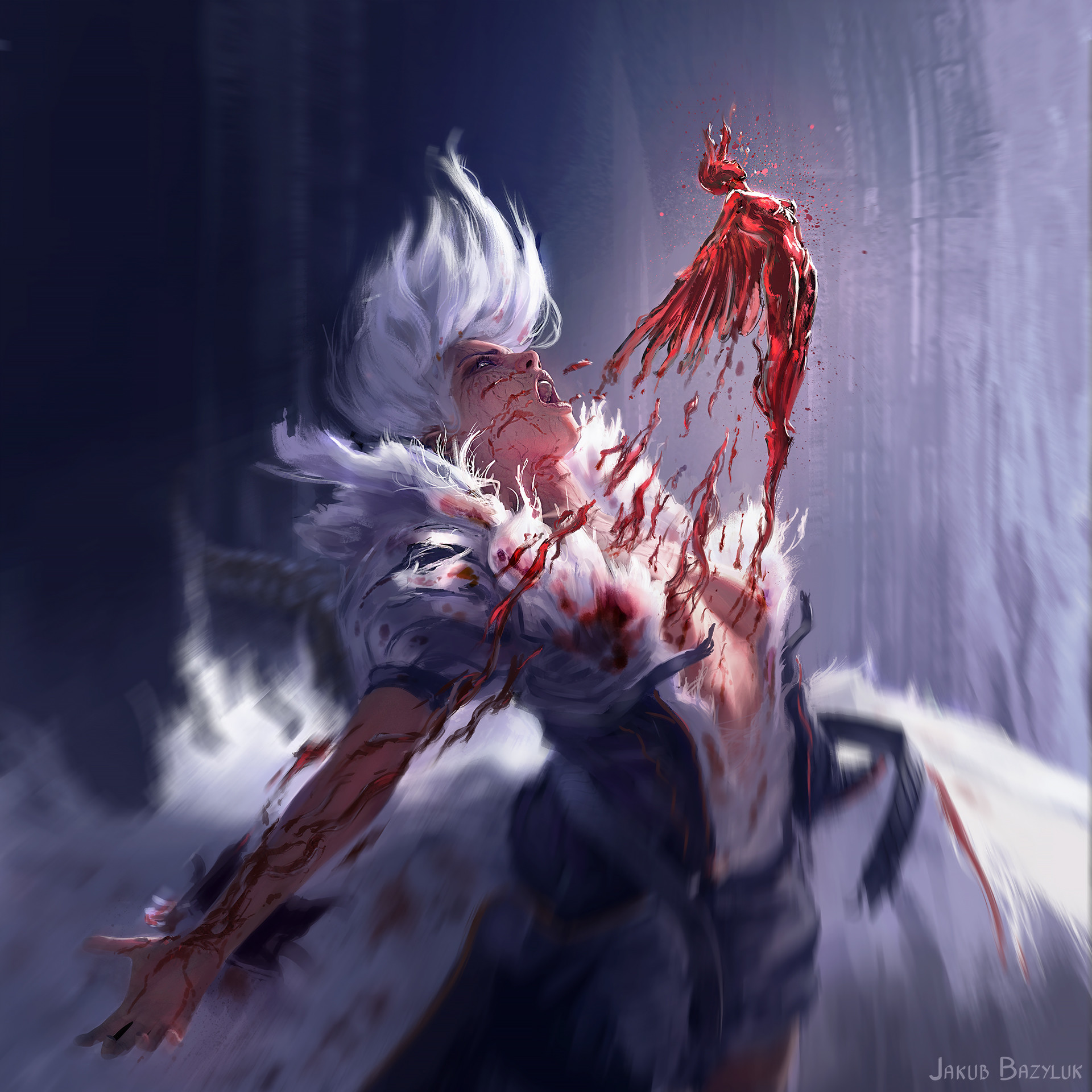
By Jakub Bazyluk. A spellcaster violently letting the River flow for a spell.

Magical Exhaustion

As the River flows so too does the spellcaster's body suffer wear and tear. Their neurons, during the casting of a spell, are firing on every possible cylinder. The complex network of bacteria, fungi, and cells that makes up a living being are all, for that moment, uniting their potential to one specific purpose. Such effort does not go unpunished. Eventually, a spell caster will expend all of their spell slots and be left with just their own, natural, mortal selves.

What does this look like? It is different, yet always the same. A feeling that one's heart is beating slower - that their blood is thinner than it was before - that their stomach cannot digest food or liquid. Thinking is done through a haze as memories are rebuilt and personality traits reestablished by the previously overloaded mind. It will feel like your nails are loose in their cuticles; like your bones are only barely attached to their joints.

In other words, it is not a pleasant feeling. Not like being exhausted, but similar, thus its simple term of being magically exhausted. No spellcaster likes it. Many avoid casting their last spell so that they can avoid this state. In games where they only get one or two spells a day at early levels, it is a state frequent. In exchange for being able to blow a door open or warp someone's perception of you, you just feel like abject shit.

Below, a d12 table. Roll on it when you spend your last spell slot. This effect is lost when you regain any spell slots. These effects are in addition to the above description.
  1. Your eyes are weakened; you see low detail versions of everything around you.
  2. You lose all sense of temperature except for a spreading, extreme heat inside of you.
  3. You vomit immediately, and can keep no food or liquid down for long.
  4. Memories of specific things, such as people's names, your favorite color, or the name of where you are disappear.
  5. Your personality is eroded, leaving you bland, neutral, and unimpressed with things around you.
  6. Natural instincts like fear, pain, and anger are gone, significantly mellowing your reactions.
  7. When others look at you, they forget what you look like, sound like, or act like the moment they look away.
  8. Your name is damaged; others can only remember and refer to you as either the first or last letter of your name.
  9. Non-magical things that you touch sometimes slip through your fingers as if they were never there.
  10. Your thoughts leak out of your head and into others around you.
  11. A magical, aurora-glowing sweat drips off of you and rises as steam too. Whatever it touches - clothing, grass, other's skin - it steals away its color.
  12. You continuously cry, though these tears you shed are more akin to blood than anything else.
A night's rest, a week's rest, whatever your rest is allows your body to heal, and thus the magical exhaustion ends.

Exhaustion serves as a way to note that you are growing stronger. Magical exhaustion is no different. Eventually, your ability to let flow greater rivers for longer duration will mean that magical exhaustion is harder and harder to come by. And just as muscles grow visibly larger, a spellcaster grows a greater presence the more powerful they become.

By Seb McKinnon.
Magical Exhaustion is similar to feeling as if you are fading away, mist in the sun.

Eldritch Presence

Eldritch Presence is the concept coined that shows how powerful a spellcaster is. It is an aura about them - a non-visible force that is felt in the minds of those close. The higher the spell level that the caster can cast, the more powerful their Eldritch Presence is.

It feels like looking at a sky where stormclouds are just creeping on the horizon. Like looking around and seeing a gentle wind pick at the trees and grass as the grey above grows ever darker. A gravity that does not pull you inwards,and a force that does not push you away but that threatens almost innocently. It sets your hairs on fire, waves of goosebumps racing from shoulder to hand. Cats will bristle if this force is malignant. Your hair will stick to your head, as if you are sweating. Glass fogs, blades become sharper, colors more vivid. Most noticeably of all, your thoughts will race. Faster and faster will you think as if something was empowering your mind in ways never before felt. Like an adderall drop, a hit of speed.

These effects are slight for neophytes. Even for those well-versed, able to cast magics entering into the third, fourth, fifth levels can they be written off by the ignorants who know not what Eldritch Presence is. But beyond that, it is tangible. It is a pressure. It makes the commons bow to the wizard, the king sit more rightly in their throne, the guards ever more guarded.

Hard it is to put a range on such an effect. The range is your sight. If you can see a powerful spellcaster, you can feel their Eldritch Presence. If they are close enough to you that you can hear their voice then you are close enough to feel their strength.

This is why dragons, demons, angels, and all other manner of superior creatures can confidently stare down a battalion of soldiers and not be harmed. So great is their Eldritch Presence that it halves the force of sword swings, makes arrows miss wide. Force field of Rain. Armor of Power.

And if this is how it feels to hold magic, and if magic protects you from certain death, then so too can magic be seen similar at hit points - abstraction of life as it is.

Guild Wars concept art.
Strong Eldritch Presence can even make others perceive you as something beyond mortal.

Spell Slots as HP

Spellcasting characters no longer have hit points. They instead have spell slots. If they are a half-caster (ranger, paladin) they are uniquely equipped, as now they have their starting hit points and their spell slots to protect them.

When a creature/character (hereafter referred too just as a creature) would suffer damage while having at least 1 unspent spell slot, they instead take no damage unless the damage die rolls either its max number or is above 6 + the amount of spell slots unspent, whichever is higher.

Example: if a 1d8 longsword attack is made against a wizard with 1 spell slot, the longsword needs a 7 (6 + 1) or 8 (max number) to hit. If the wizard has 2 spell slots, only an 8 will hit. If a 3, only a 9, thus requiring a modifier of some sort to deal damage.

If the damage meets one of these two criteria, the spell slot is lost.

If a creature is Magically Exhausted (no spell slots), any damage die rolled against it knocks the spellcaster out and either kills them or leaves them dying, depending on your exact ruleset. If they have hit points, then those instead are effected until the same situation occurs.

This makes magic-users more difficult to kill if they are completely fresh, but essentially makes them nothing better than dead meat if they are out of spell slots. Resource management is all the more difficult now, as you are spending hit points. It will become important for a spellcaster to find a way to regain spell slots more quickly, if not at least temporarily, in order to stave off death for just a while longer. But it also empowers spellcasters when fresh to take on big risks. They can match the great warrior in a duel so long as they allow the River to flow free and to flow hard.

By Seb McKinnon.
Even a little girl, enriched with magic, is mighty as the armored soldier.

Temporary Spell Slots

The following methods can be used to regain temporary spell slots; that is, spell slots that disappear when your normal spell slots are regained. You cannot have more temporary spell slots then you have maximum spell slots.

Places of Power, such as shrines, altars, magical lairs, old arcane battlefields, moonless nights with the right constellations, etc etc, can be meditated in for 10 minutes, regaining 1d4 spell slots. 

Rituals & Sacrifices if you are a divine/miracle caster can be done in the name of your Power/Divinity, allowing you to regain 1 temporary spell slot per miracle you know.

Eldritch Cannibalism can be done on a creature with Eldritch Presence. Drinking a dragon's blood or eating a captured pixie will give you 1 temporary spell slot per HD the creature has.

Contracts & Pacts & Deals can be made with a creature with Eldritch Presence. In exchange for a favor, they lose 1 spell slot and you gain 1 temporary spell slot. They cannot regain their spell slot until you lose your temporary one. Temporary spell slots gained this way are added on top of your maximum spell slots and do not disappear when you regain spell slots, instead only disappearing when the favor is completed or you die.

Various esoteries, like blue goldstones, opals with polished fire, or the tears of a heartbroken siren can be used similar to health potions, granting 1 temporary spell slot.

Related image
By Seb McKinnon.
The River can flow from one to another in pacts and rituals.

Cantrips & Other Outliers

In some games and traditions, spellcasters have access to cantrips - low level magicks that require little effort to use. If you can cast cantrips, you are using your Eldritch Presence to shape reality in a minor way around you. Even when Magically Exhausted does a spellcaster have at least a little presence, and thus can cast cantrips. Cantrips have no bearing on a spellcaster's hit point abstractions.

In some games and traditions, spellcasters eventually can learn to cast a low level spell as if it were a cantrip. This is a feat of great power. If you can only cast a single spell like this, treat it as if it were a cantrip. But, if you are, say, a demon with multiple at will spells, your Eldritch Presence is never truly diminished. The only thing that can kill you is a magical weapon of some sort or a spell being used to destroy you when your limited spell slots are spent. Mortal forces cannot.

By Seb McKinnon.
No steel nor arrow will kill that with Presence Eldritch as This.

Rising Legends - The Core Rules

Here's my umpteenth crack at a rulesbrew for me to use at home. I've designed it in a way that I think will make it easy for non-gamers to run, has clear depth, and remains out of the way for most people. BTW, I AM taking name suggestions.

Suke

Rising Legends is a game where you play as characters with nothing who try desperately to become something by putting their lives on the line.

To play, you need a d20 and a d6.

First, create your character. In order to do so, you follow three simple steps:

  • Roll for 2 keywords that describe your character, or choose them.
  • Write down your three attributes (Savvy, Athletics, and Weird), and assign each one of the following numbers: 12, 9, and 6.
  • Choose your starting supplies.
The referee of the game runs the world and obstacles. They will also provide the lists of keywords and starting supplies. Future blogposts/supplements will provide pre-made worlds and sagas, complete with their own lists of keywords, starting supplies, obstacles, adventure locations, additional rules, and other useful materials for running a game.

The referee describes the game world, and the players describe what they want to do. If they are doing something dangerous or difficult, the referee may ask you to roll under one of your attributes with a d20. If you roll equal to or lower than your attribute, you succeed. If you roll 10 under your attribute, you succeed with style, and the referee describes a bonus you get in the situation.

Keywords are words or phrases that represent your character. If your keyword applies to a roll, you can roll 2d20 instead of one and take the better result. If both keywords apply, you still only roll 1d20. 

As a character goes on adventures, they will find gear, magic, and helpers that will aid them. These should be notated by a player who receives such a bonus. Additionally, when a character finishes an adventure, they gain fame.

Fame is a number that represents how well known the character is in the wider world. At every increment of 10, your character will find themselves rewarded with something special . This can range from someone wishing to apprentice under them, to potentially gaining ownership of beautiful palaces, or even training which increases your attributes. Additionally, after every adventure, your character gains a new keyword. This keyword will either come from the earliest list, or be tailor made to fit your character.

If your character successfully rises to 100 fame, they become a Legend. At this point, they somehow leave the world, perhaps in a tragic twist of fate, or by being whisked away by holy powers, or even retiring to become the ruler of the land for a time after. 

Karl Sisson

During an adventure, your characters will come face to face with obstacles. An obstacle comes in one of three categories: Monsters (anything that the party encounters, including mundane things like bandits or lions), Hazards (which range from deadly traps to dangerous poisons), and Weirdness (such as horrible curses or strange powers). Every obstacle has a number associated with it, the Obstacle's Danger, which ranges from 1 to 10. When the referee says that a player must make a roll forced by an obstacle, they add the obstacle's danger to their roll.

Occasionally, an obstacle will somehow harm a player. This damage, represented by a 1d6 + the obstacle's danger, is dealt to one of the player's attributes. For example, a bandit's serrated dagger will deal 1d6 + 1 damage to Athletics, while a warlock's wicked hex will deal 1d6 + 3 damage to your Weird. If a number falls to 0, the players character is taken out until the obstacle has been overcome, the party flees, or everyone loses. Damage to an attribute can be healed with medicine (or similar means), or through rest. Every day of rest restores 1 point of damage to an attribute. Some gear, magic, or specially made tools can reduce damage taken.

While taken out, your character cannot do anything and is effectively unconscious on the ground (or in the case of Weird being reduced to 0, is rendered immobile by some strangeness). Once the obstacle is no longer present, the player rolls 1d6 for their character and consults the following table for their character's fate.
  1. Scarred! The character bears a distinctive scar from their encounter, but is otherwise fine.
  2. Traumatized! The character has been traumatized by the obstacle. For the next 2 game sessions, the player adds 3 to any rolls they make.
  3. Crippled! The character has been crippled in some way by the obstacle. The referee chooses a relevant attribute to be reduced by 3 permanently.
  4. In debt! Your character should have died, but has made a deal with Death itself in order to live. The referee comes up with a condition (such as "You must pay respects to me through blood sacrifice at midnight every night!") If the condition is not fulfilled at any point during the rest of the character's life, they die.
  5. Spiritless! The character has lost their spirit for adventure. They wander off, seeking a quiet place where they can retire.
  6. Dead! The character succumbs to their wounds and dies.
When trying to overcome an obstacle, you must reduce its danger to 0. This can be done through a number of ways, such as subduing it, killing it, banishing it, disarming it, and so forth. To overcome the obstacle, the referee will ask how you do so, and then tell you which attribute to roll under. The amount you rolled under is how much the obstacle is reduced by. Always use popcorn initiative--or the person whose turn it is deciding who goes next--to decide turn order. After everyone has went, the last person to go now goes first.

Beware! Many obstacles cannot be reduced through conventional means; a dragon cannot be killed with simple sword strikes, no more than a spear will scare away a ghost. If your described plan doesn't work, the referee will tell you that you automatically fail and describe how. 

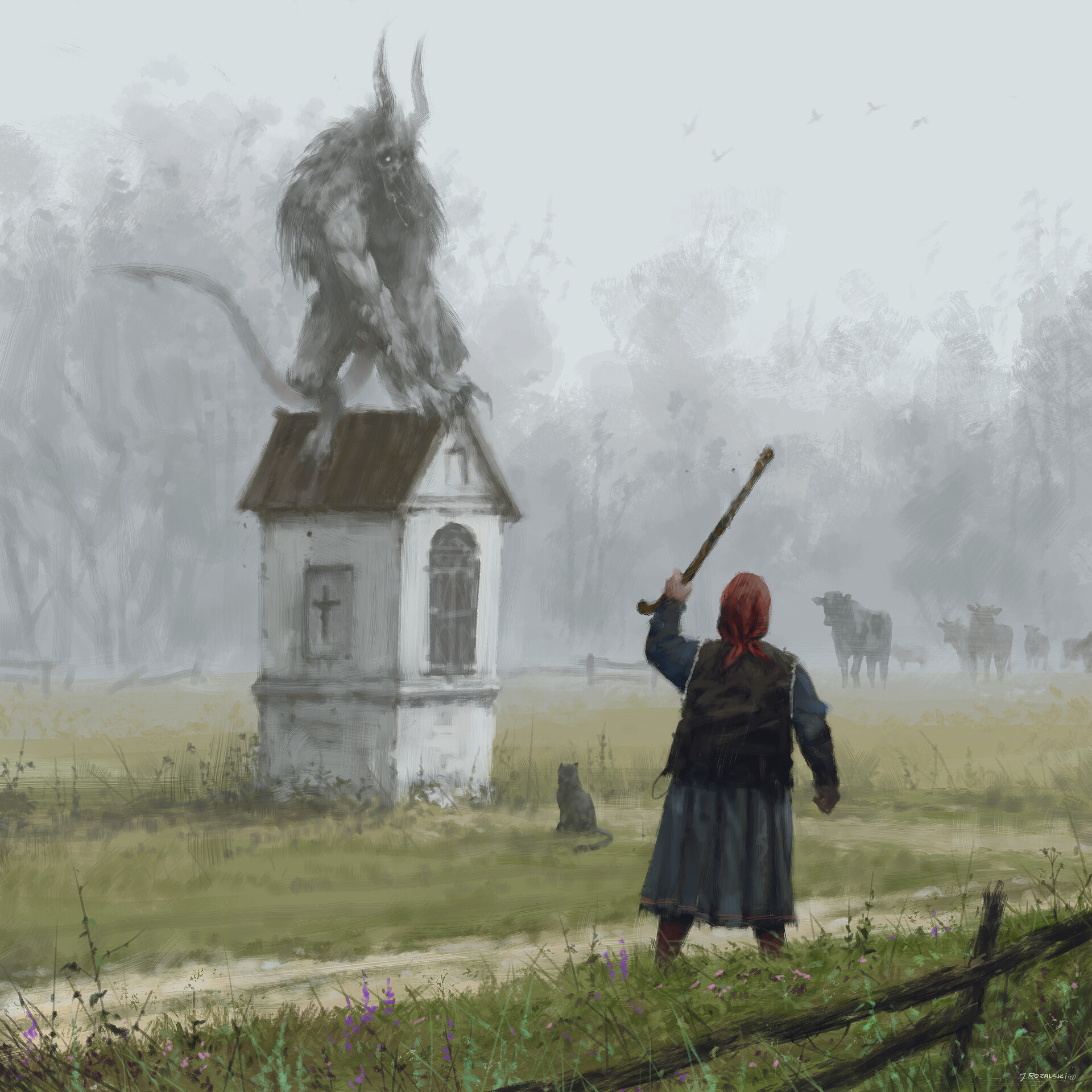
Jakub Rozalski

The Sphinx - Class, Race, Hireling, NPC, Enemy

The Sphinx is, along with the Angel and Medusa, my favorite fantasy creature. They are one of my principle OD&D races, featured heavily in COMMANDMENT, and are aesthetically one of my touchstones for Fantasy as a whole. So, have a blog dedicated to fleshing out the Sphinx in OD&D, 5E, and general fantasy games.

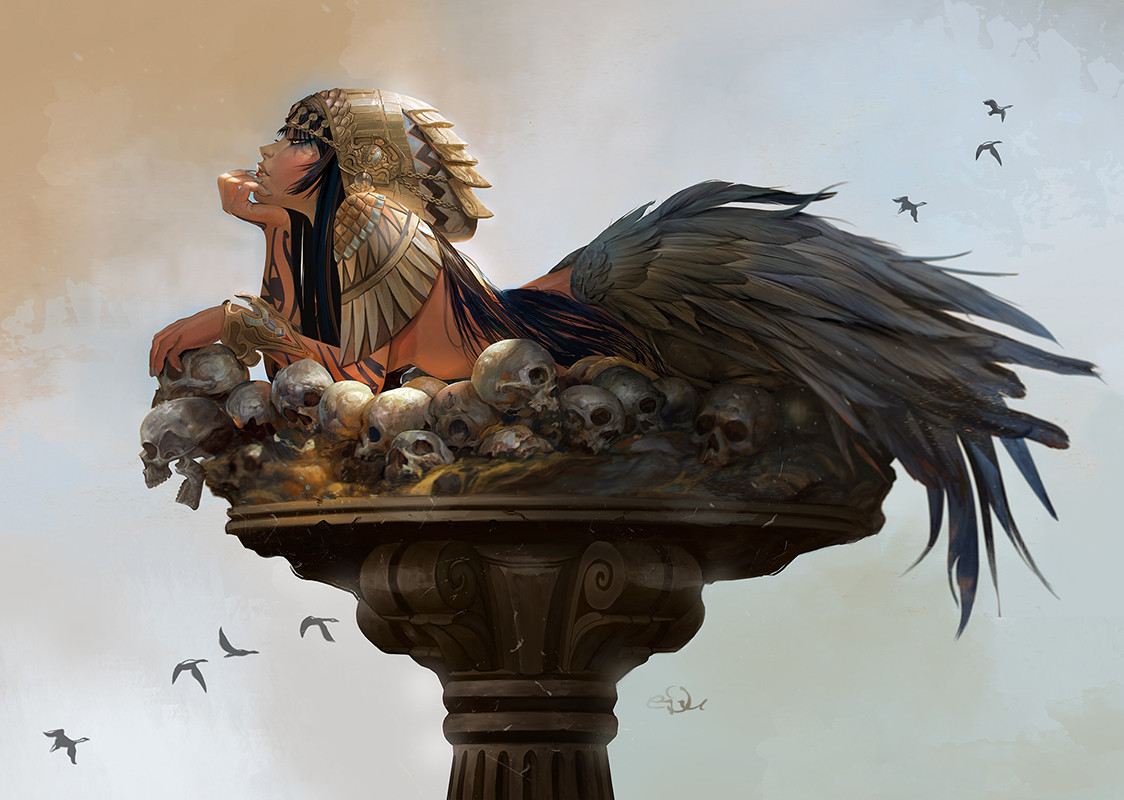
by Casimir Lee
The Universe, and, in fact, every universe is a spell in the process of being cast. This spell is sentient. This spell wishes to understand itself, its purpose, where it is going, where it came from. Thus life is born. Stardust makes complex compounds, the universe's magic is sheaved off to form a soul, and evolution begins. Across every universe, life of all kinds abounds. The Sphinx is but one of many, but one special nonetheless.

A riddle, personified. The Sphinx was born wholecloth from the divinity that is the universe, created from eons of watching life evolve and still not finding the answer to the Question of Questions. The Sphinx knows this. It is born wise, adult, knowing of many things and many languages. But the Sphinx is young in soul, lonely amidst the stars, the cosmos. It knows why it was born, but not why all was born, and it sets to work. The work: become wiser still, through any and all means, so that one day the Question of Questions can be answered.

This makes them great adventurers. They happen upon a strange land and seek to know all there is to know. If you're looking for treasure, or weapons, or secrets, and you happen upon a man or woman or them wing'd and gold-swathed, a man or woman or them who is a master of a thousand and one riddles, you'd be a fool not to ask them to ally with you. And, of course, the Sphinx will. You are but one of many vectors towards wisdom in the future. By knowing you, watching you, fighting with you, and even killing you, the Sphinx grows more.

Not all Sphinx are so kind. Some, especially those that are older, are cruel. They seek wisdom in violence, death, suffering, annihilation. Their kin do not judge them for this. There is wisdom to be found in all things. There in lies the biggest difference between you and they. You have morality guiding you forward. The Sphinx has a quest, eternal and known, and any means needed to complete it is thus Righteous. Some are chaotic. Some are lawful. Some choose to be good. Some choose to be evil. Some choose to be both, or neither. All, though, are Righteous, and they can be convinced no different.

Consecrated Sphinx
Lius Lasahido
The form of the Sphinx is a bit different then what you're used to imagining. This is because they are creatures of two forms.

They are born as adults, in the shape of humans, for it is that shape that is most common throughout all universes for those seek answers. They are wing'd, to better traverse the world. Gold adorns them, for gold is the metal of greed, and they are greedy for wisdom in all of its forms. Their skin is of a color olive, or mahogany, or porcelain. Their eyes are hazel or green and star-flecked.

But wisdom is the domain of lions as well, who know much of the universe instinctively. Thus, the sphinx has the ability to take on this majestic, powerful form. The older they are, the larger their shape. They retain their wings, too. A Sphinx who no longer wishes to adventure will usually retain this shape, for reasons many.

Fur sapphire-rich or jet-deep. Manes wild as burning plains or regal as the king's crown. Eyes slitted, glowing in the dark, burning pieces of gold worth more than any coin. Claws and fangs sickle'd and sharp, blades enchanted by long learning years.

The Sphinx is not born, it is made. All are infertile. When a Sphinx is truly wise, it will have answered the riddle of how to create a child and will do so. Some will choose to parent, but most do not; after all, their child is an adult already, ready to fly into the world and have its own questions answered. Know that this means that it is rare that Sphinx congregate. There are no Sphinx towns or Sphinx cities. The only time they gather is in death, when their souls fly into the great beyond, ruminating at the Horizon together before going to explore some distant afterlife.

Know too that a Sphinx cannot die of old age, unless it wills away its immortality. Thus, many live for epochs, recording what they know on stone tablets or in omen and song.

Eduardo Francisco
All Sphinx will ask riddles. They ask these riddles not because they know the answer, but because they are trying to find an answer. However, it is common wisdom that creatures will not lend the Sphinx their minds for any suitable length of time. Most get frustrated and leave. This is why so many Sphinx will threaten death, or a curse, or offer a gift in exchange for having the riddle answered. Coercion is, of course, how wise beings barter--at least, that is what many Sphinx come to believe.

Here be a riddle generator. For every game you play a Sphinx, or run with a Sphinx in it, keep it on hand; most Sphinx greetings include a riddle of some sort. In exchange for wisdom gained, the Sphinx will likely aid whoever it is answering the riddle. This is one of the many ways Sphinx adventurers come to be.

SPHINX - OD&D

Sphinxes are magic-users, and can only progress to 8th level (Warlocks). Sphinxes can use no magical items other than scrolls and potions. Sphinxes may only arm themselves with bows and slings. They have a 1-5 chance of knowing the answers to any riddles, and their wisdom allows them to hire sages at 1/10th of the price (200gp per month). After progressing to 2nd level (Seer), sphinxes can begin to research cleric spells. They cast these spells with their normal magic-user spell slots. All sphinxes can assume a monstrous shape, wherein their body takes the form of a lion, giving them two attacks with their claws. In their normal shape, they have wings, allowing them to move 2" through flight. Sphinxes are also magically-resistant, and thus save against magical effects as if 4 levels higher. Finally, a sphinx can speak any language.

Why does the Sphinx retire at 8th level? The Sphinx, by then, having learned much of this world, feels its soul pushing it to learn through other ways. 8 levels worth of adventure grounds the Sphinx; it then goes on to serve as a sage for some courtly figure, or some great rising power. In this position it will serve for a few centuries before returning to the adventurer's life, likely vastly more powerful, and more so in the form of a traveling deity then a wandering mercenary-for-hire.

I suggest using the COMMANDMENT spells for the Sphinx.

Image result for sphinx character art
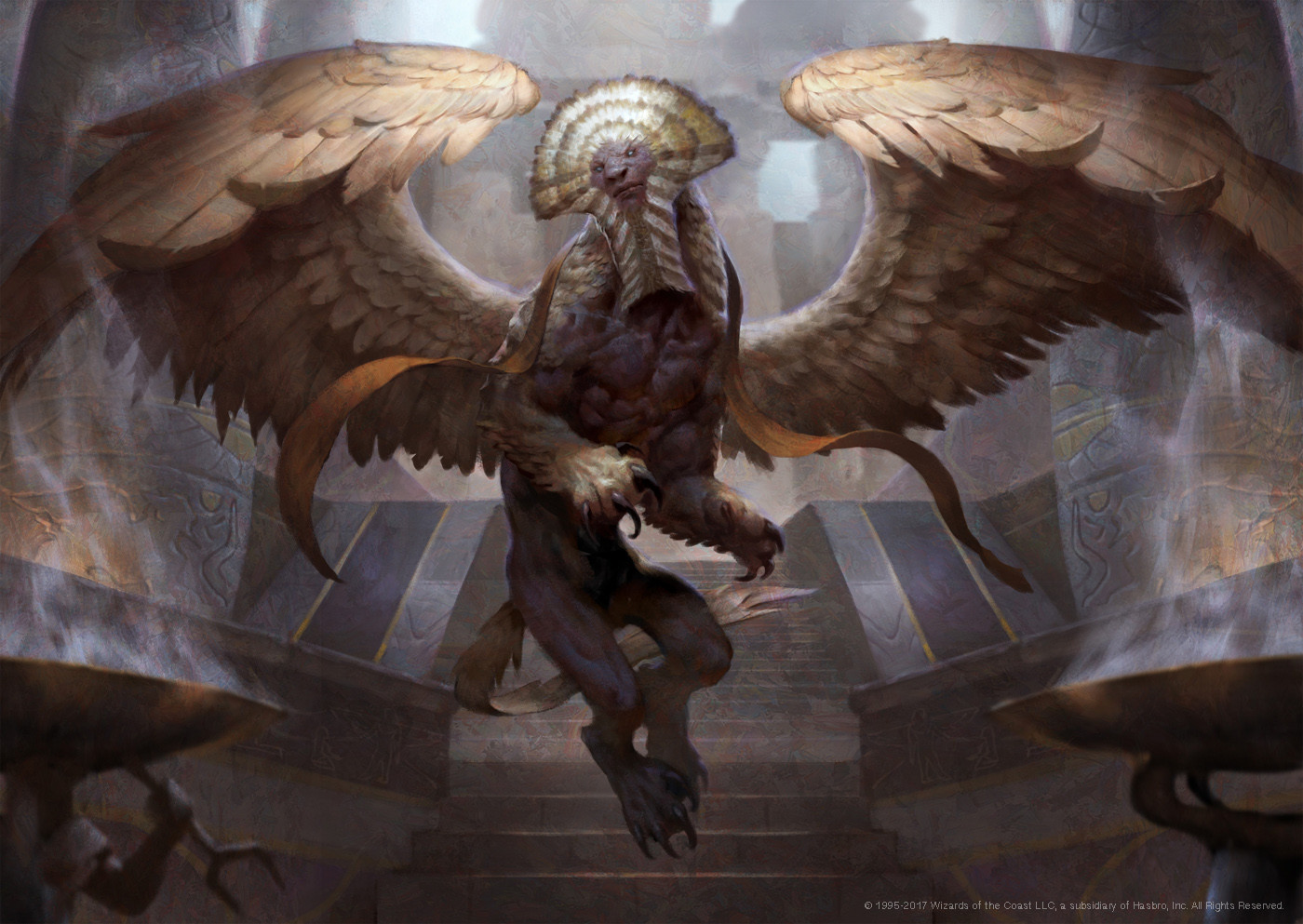
Magic: the Gathering

SPHINX - 5E

Ability Score Increase. Your Wisdom score increases by 2, and your Intelligence score by 1.

Age. Sphinx are born fully mature, and have no natural age limit. 

Alignment. Sphinx tend towards neutrality in all ways. Adventuring Sphinx tend to be good, but more than a few turn evil as well.

Size. Sphinx in their humanoid form stand between 5 to 6 feet tall. Your size is medium.

Speed. Your base walking speed is 30 feet. You also have a flying speed of 15 feet.

Languages. You know a number of languages equal to your Intelligence + your Wisdom modifiers (minimum 1).

Born Wise. You have advantage on Intelligence, Wisdom, and Charisma checks that you are proficient in. 

Regalshape. As an action, you can transform into a CR 1 lion. Your Strength, Dexterity, and Constitution ability scores are replaced with that of a lion's. Your Intelligence, Wisdom, and Charisma scores remain the same. You have a human face while in this form, and can speak and cast spells with verbal components. Once you've used this feature, you cannot use it to transform back into your humanoid form until you finish a short or long rest.


SPHINX - HIRELING

A Sphinx can be hired for a cost of 4,000 GP per month. Sphinx hirelings are of 8th level. They will teach magic-users and clerics spells they know, lend their spells as aid to those that hire them, and provide wisdom, guidance, or information. The Sphinx will not leave the castle or palace alongside whoever hires it, and is unlikely to ever leave during their employer's lifetime. Yearly, the Sphinx will ask a riddle of its employer. If the riddle is not answered within 1 month's time, the Sphinx will end its contract and seek another employer.

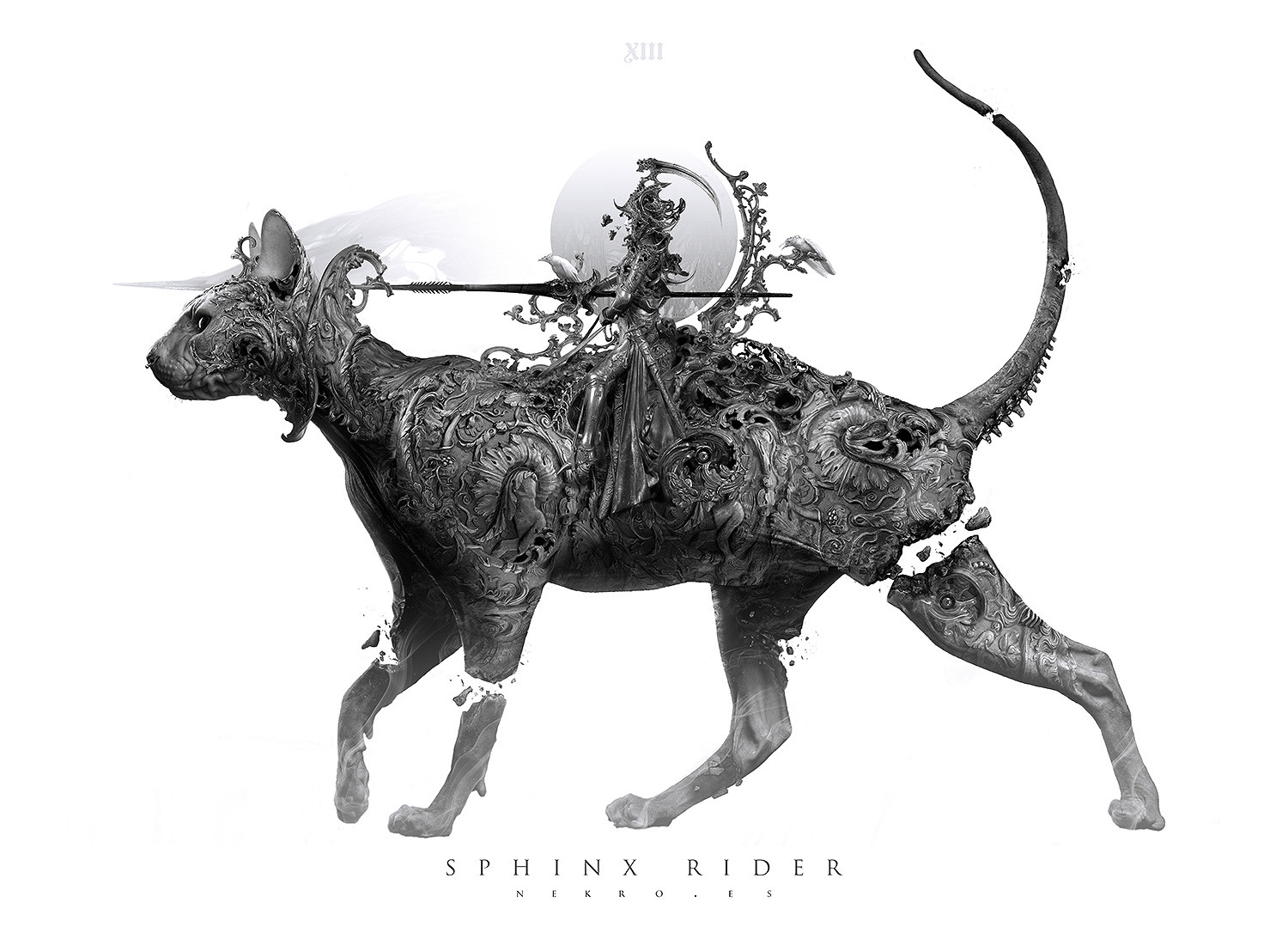
Nekro

USING THE SPHINX AS A CREATURE

Most Fantasy games have statistics for a Sphinx. I suggest the following feature to be added mechanically.

Riddle Curse/Gift. When the Sphinx meets a creature for the first time, it will ask if it would like to answer a riddle. If the creature fails to answer the riddle before it leaves the presence of the Sphinx, it shall be CURSED. This curse cannot be lifted save through a powerful exorcism, answering the riddle, or death. But, if the riddle is answered before one leaves the presence of the Sphinx, they earn a gift. Roll 1d6 below to see what this gift is.
  1. A piece of lapis lazuli, inscribed with a riddles. Acts as a spell scroll of one 6th level COMMANDMENT spell.
  2. A map that must be translated in order to find the treasure of which it leads to.
  3. Its services, for a year and a day.
  4. A curse to be placed on the head of one creature of the riddler's choice.
  5. The answer to a single question. If the Sphinx does not know the answer, another question may be asked until it does.
  6. To be sent back in time, reverted to the age of your childhood, and allowed to live your life again but with the knowledge of now.
Treat a party as players as one person, thus giving them only one gift as a whole.

Most Sphinx serve as a roleplaying/social encounter, as well as a puzzle. A Sphinx used in combat should be one that seeks violence as a means to wisdom. This is a wide umbrella. Perhaps the Sphinx is looking to hunt all humans down, as it believes that wisdom is found in a world without them. Or, maybe, the Sphinx seeks to rend and tear armor of all sorts, and will believe itself truly wise after it has damaged every piece of armor to ever be forged. These esoteric reasoning's give the Sphinx an esoteric vibe; it is a strange creature, clearly inhuman, and while not all together horrible, it is something mystifying, horrifying, and awe-inspiring to those that encounter it.

Having the Sphinx wield powerful magic, be surrounded by enchanted items, and dwelling in places of power is key to this. For Sphinx lairs, roll 1d6 or make your own:
  1. The funeral-palace of a long-dead hero or god-king.
  2. The throne-room of a demon-queen.
  3. A place where magic is so thick in the atmosphere that it changes the weather.
  4. Underneath the boughs of a sacred tree, one where some messianic figure once rested.
  5. In the center of an ancient battlefield, where great forces were risen and vanquished.
  6. A place where an afterlife borders the realms of the living.
When the Sphinx is met, it will ask a riddle. If the players decline to answer, roll 1d6 to see how the Sphinx responds.
  1. A curse upon all who do not answer.
  2. Unspoken and immediate hyper-violence.
  3. Offering a gift of some sort.
  4. Stating that it will kill someone the PCs love dearly if not answered.
  5. A sudden onslaught of monsters is released from a hidden space.
  6. A spell, powerful and horrid, is cast upon the PCs.
Roll on treasure tables of your choice, as if you were rolling for a dragon horde. This is the treasure that fills a Sphinx's lair, gifted to it by rulers from a thousand worlds, all of whom have sought the Sphinx's wisdom.

Sentient creatures surround a Sphinx. Dragons will come to trade riddle-answers for treasure, monks will come to study in its shadow, magic-users to learn spells and clerics prayers, adventurers seeking new vistas or long-lost ruins, monarchs and rulers and tyrants wishing to become better rulers, oracles in training to learn the secrets of the future, and, most rarely of all, another Sphinx, coming to trade pslams for just a short time. Thus, an entire dungeon or adventure site manifests around the Sphinx.

Image result for humanoid sphinx art
Hekkil


Dragonborn are Irradiated Humans Who Experience Metamorphosis From A Violent & War-Filled Life

When a dragon (of any stripe; some are elementals, some are greedy dwarves, and some are extinctions made flesh) dies, its corpse bleeds literal majesty into the world around it. Think of this majesty as something akin to radiation. It seeps into the soil, spreads on the wind, rains from storms.
Some years later, children are born. Children with ill temperaments, obsessed with fire or lightning or something just as dangerous. These children, male and female, are not evil, but they are violent. They fight. They push. They are always human at first.
Sometime in their adult years, they will be hurt. Their blood will be of a strange color then, not the red it was of their youth. That strange color will harden over their flesh. Scales emerge, in small sections. A mercenary whose eye was hurt is now slitted, and half his face covered in blue scales, and from his spine horns have burst through the skin, spreading scales more. Like finds like, more often than not. Sellswords, all in various stages of rebirth, mixtures of scale and human, make for fantastic soldiers.
Image may contain: 1 person, cloud and sky
A war wizard mid transformation.
Eventually, after enough pain has been suffered, nothing human is leftover. Know this as a Dragonborn in true. Something once human that has given into the majestic violence that has gathered in its soul. Capable of breathing the same magic as a dragon, a warrior through and through. Not evil, not always, and not always good either. Warrior poets and paladins and barbarians across the world--entire battlefields of fielded quasi-dragon and full-fledged dragonborn mercenaries fielded and thrown at once another.
Image may contain: one or more people
Full-fledged dragonborn
Their society is an odd one. Full-fledged dragonborn gather in clans and hide away from the rest of the world, usually at least. They will emerge only during times of war, pledging their swords to one side or the other, collecting gold, hoarding gold. They are draconic, after all. They will search for those just beginning their transformation, or others deep into it. They will guide them into more battles, seduce them into their warbands, nurture them into true dragonborn. They cannot reproduce, after all, irradiated with majesty as they are. Their clans grow by recruitment.
No photo description available.
Dragonslayer experience more change.
Sometimes they do choose to live amongst other peoples. Rare this is, but they will use their veteran's prestige to fund their manses and workshops. These dragonborn, sometimes half-formed, other times fully formed, must work hard to control their violent impulses. It is difficult. Usually, it is not worthwhile.
Others still seek more dragons, and become famed dragonslayers. Their instinct pushes them to do this. Their souls devour majesty. Soon, they become half-dragons and, if they are lucky, dragons in full too.
No photo description available.
Half-Dragon Well on the way to becoming a dragon in true
All manners of draconic creatures (Wyverns, Fire Drakes, Ice Wurms, etc) are born in much the same manner--mundane animals born with majesty that, through a violent life, become something new.

Have an OD&D class for this style of Dragonborn.

Dragonborn
Dragonborn may progress as a fighting-man up to 8th level (Champion). They may use magical weapons, but enchanted items fail in their hands, and magical armors cannot be donned. When a dragonborn first suffers 6 points of damage, roll a 1d12 on the table below. The dragonborn evolves thusly. After the dragonborn suffers twice that damage (12), it rolls again. And again after twice that (24), and so on and so forth. If the dragonborn rolls a feature it already has, it does not reroll, but simply remains stable. Damage suffered does not need to be at all at once, and can be suffered in pieces in between healing of any kind. A dragonborn who gains all 12 features retires at level 8, going into hibernation and reawakening as an 8 HD dragon wyrmling.

Draconic Features
  1. Scales appear where your wounds were. Lower your AC by 1 (or increase by 1 if using Ascending AC).
  2. Magic can barely hold purchase in your soul. You save vs magical effects as if you were 4 levels higher.
  3. Your eyes turn the color of gold coins, your pupils into slit-daggers. You have infravision in darkness, and can see golden coins through walls no more than 1 inch thick.
  4. Your musculature changes. Increase your Strength modifier by 1.
  5. Your flesh becomes enriched with power. Increase your hit points by 1d6.
  6. Claws burst from your hands and feet, and your legs become bow-legged. You can no longer ride non-draconic mounts, and your hands and feet count as off-hand daggers.
  7. Wings burst from your upper back. Armor must be specifically modified to accommodate this. You can move 3" on your turn through flight.
  8. A tail bursts from your lower back. Armor must be specifically modified to accommodate this. Your tail counts as a limb for moving, holding, or pushing objects, but not weapons or shields.
  9. A set of horns burst from your head. Helms must be specifically modified to accommodate this. They count as daggers.
  10. Your mouth becomes a hellish hole of sharpened fangs. Your bites count as off-hand dagger attacks.
  11. Your voice becomes monstrous, draconic. Hirelings do not fail morale checks in your demanding presence, and creatures subtract 5 from their morale scores against you.
  12. Something apocalyptic dwells in your breast. You gain the breath weapon of a dragon wyrmling.
Decide your own scale color/type, but stick to it.